



























Why Employee Handbook Translation Is Critical for Global HR Compliance

Table of Contents
-
- 1. Introduction: The Importance of Employee Handbook Translation
- 2. Why Employee Handbook Translation Is Vital for Global Compliance
- 3. Legal and Cultural Considerations in Employee Handbook Translations
- 4. The Risks of Inaccurate Employee Handbook Translations
- 5. Best Practices for Employee Handbook Translation
- 6. Conclusion
Summary
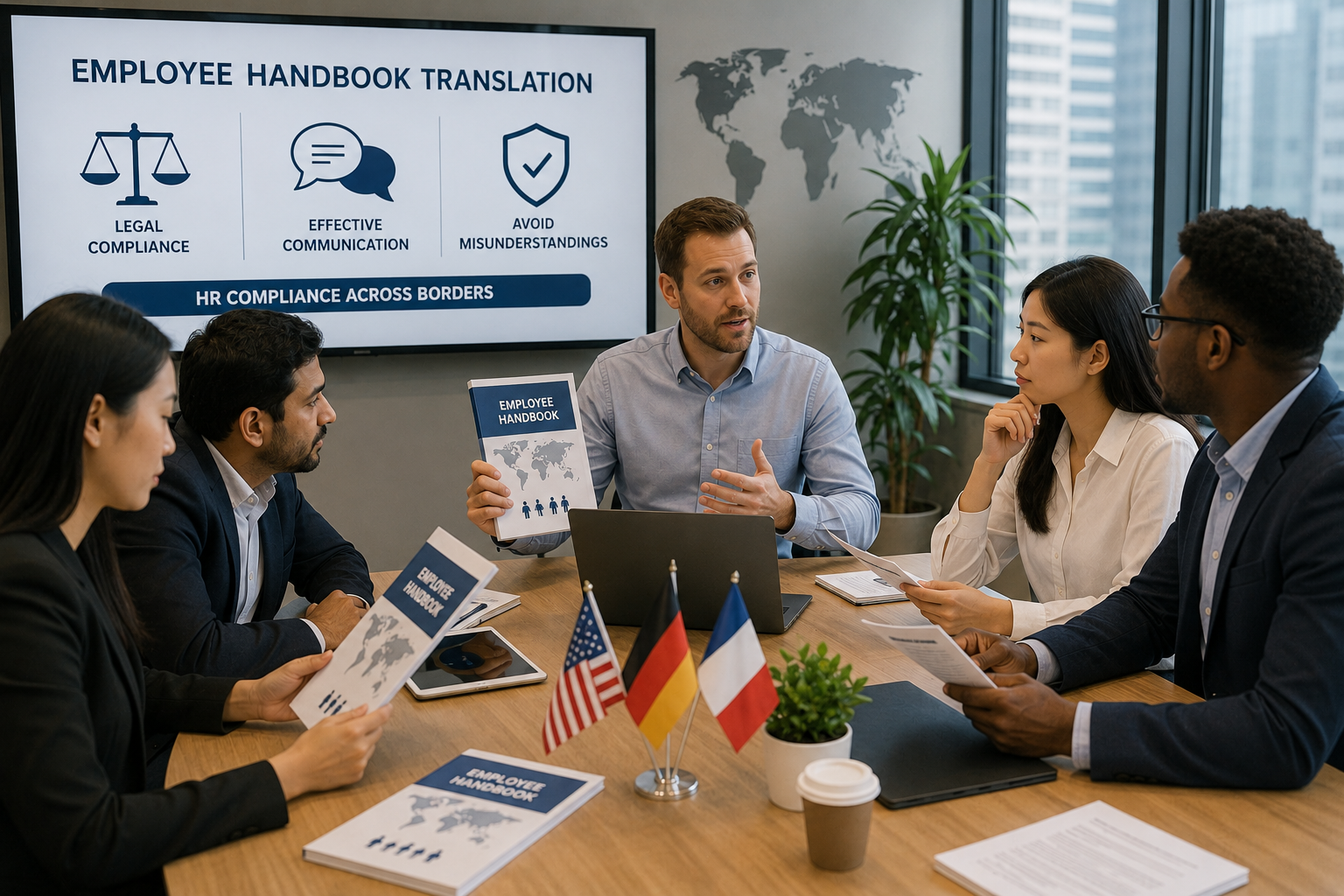
In a globalized workforce, employee handbook translation is essential for ensuring legal compliance and effective communication. This blog discusses why accurate translation is key for maintaining HR compliance across borders and avoiding misunderstandings that could lead to legal complications.
Introduction: The Necessity of Employee Handbook Translations
Imagine a scenario where your employee handbook, filled with vital policies and expectations, is misunderstood by employees because it wasn’t translated correctly into their native language. This could easily lead to confusion, non-compliance, and legal risks. When companies operate globally, translating their employee handbooks accurately is crucial to ensure that all employees understand their rights and responsibilities.
This blog will discuss the importance of translating employee handbooks for global compliance, explain the potential risks of poor translations, and provide strategies for ensuring your employee handbook is properly communicated across borders.
1. Why Is a Translated Employee Handbook a Necessity for Global Compliance?
If your company is expanding into new countries or has international employees, the employee handbook is a key document to communicate policies, employee rights, and workplace expectations. However, without proper translation, policies and rights may not be legally valid or fully understood by employees, creating potential compliance issues.
Employee handbook translation ensures:
- Compliance with Local Labor Laws: Different countries have distinct regulations regarding workplace policies, benefits, and employee rights. Accurate translations are crucial for adhering to these local laws.
- Preventing Misunderstandings: An accurate translation helps prevent employee dissatisfaction, confusion, or legal disputes over misinterpreted policies.
- Cultural Sensitivity:Some workplace norms differ by culture. Ensuring your employee handbook is culturally relevant will promote a more inclusive and respectful work environment.
Key Points:
- Employee handbook translations ensure compliance with local labor laws.
- They help prevent miscommunication and legal disputes.
- Cultural sensitivity in translations fosters a positive work environment.
2. Legal and Cultural Aspects of Employee Handbook Translations
Translating an employee handbook is not simply about translating words; it’s about translating the meaning, legal requirements, and cultural expectations embedded in the document. In many countries, an employee handbook must comply with local labor laws and workplace regulations, and any deviation or misunderstanding could expose your company to legal penalties.
- Legal Compliance: Laws vary greatly by country, especially regarding benefits, worker protections, and employee rights. A translated handbook must align with these regulations to avoid lawsuits or fines.
- Cultural Considerations: Certain concepts or workplace practices may be acceptable in one country but not in another. For example, what’s deemed respectful communication in one culture may be inappropriate in another. A culturally sensitive translation ensures the handbook addresses these nuances.
By collaborating with a professional translation service familiar with local laws and cultural contexts, you can ensure that your employee handbook resonates with employees in every location.
3. The Dangers of Getting Handbook Translations Wrong
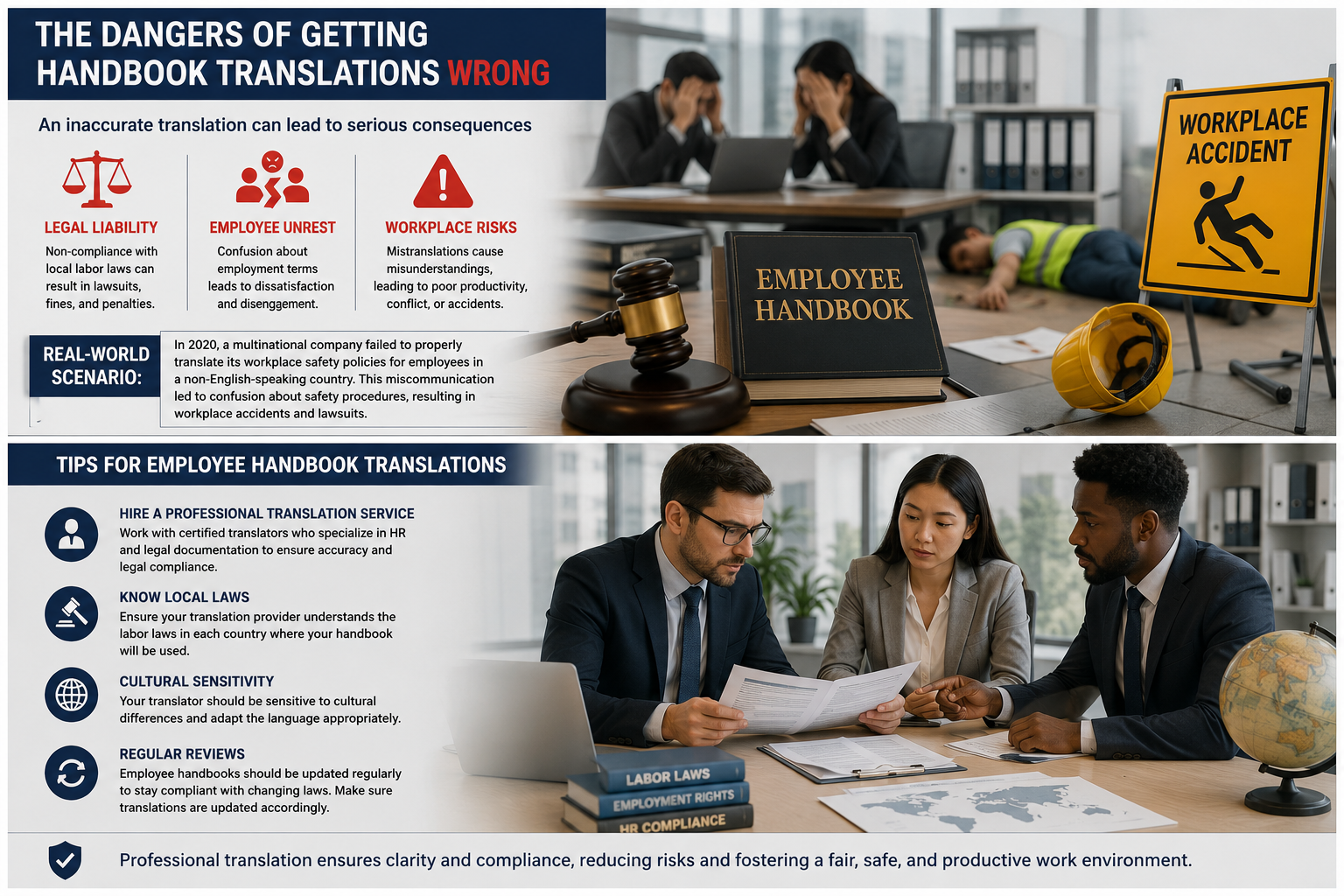
An inaccurate translation of your employee handbook can have serious consequences for both your company and your employees. Some of the potential risks include:
- Legal Liability: Incorrect translations may cause non-compliance with local labor laws, resulting in lawsuits, fines, or other legal issues.
- Employee Unrest: Employees who can’t understand the terms of their employment may feel confused or misled, leading to dissatisfaction and possible disengagement.
- Mistranslations may cause misunderstandings about company policies, resulting in poor productivity, conflict, or even workplace accidents.
Real-World Scenario:
In 2020, a multinational company failed to properly translate its workplace safety policies for employees in a non-English-speaking country. This miscommunication led to confusion about safety procedures, resulting in workplace accidents and lawsuits. The company could have avoided this disaster by ensuring accurate translations of safety protocols for their global workforce
Key points:
- Mistranslations can lead to legal liabilities, employee dissatisfaction, and workplace instability.
- An inaccurate translation can lead to miscommunication and costly mistakes.
- Professional translation ensures clarity and compliance, reducing risks.
4. Tips for Employee Handbook Translations
To ensure that your employee handbook is translated accurately and is legally compliant, follow these best practices:
- Hire a Professional Translation Service:
Work with certified translators who specialize in HR and legal documentation. This guarantees that the translation is both linguistically accurate and legally sound. - Know Local Laws:Ensure your translation provider understands the labor laws in each country where your handbook will be used. Each country has its own regulations regarding worker rights and benefits.
- Cultural Sensitivity: Your translator should also be sensitive to cultural differences and be able to adapt the language appropriately.
- Regular Reviews: Employee handbooks should be updated regularly to stay compliant with changing laws. Make sure translations are updated accordingly to reflect any changes.
Key points:
- Hire professional translators who specialize in HR and legal content.
- Ensure your translation provider is familiar with local laws and cultural differences.
- Regularly review and update your translations to stay compliant with new regulations.
Conclusion
Employee handbook translation is more than just a translation task—it is a crucial part of ensuring your company complies with local labor laws and fosters clear communication with employees globally. By translating your employee handbook accurately and culturally sensitively, you ensure that your policies are understood and followed, which ultimately contributes to a positive, productive work environment.
At The Spanish Group, we specialize in employee handbook translations, offering services in over 90 languages. Our team of certified translators ensures that your employee handbooks are legally compliant, culturally relevant, and clear to all employees, no matter where they are located. Contact us today to ensure your company is in compliance across borders.
Key takeaways
-
-
- Employee handbook translation ensures legal compliance and prevents miscommunication.
- Inaccurate translations can lead to legal issues and employee dissatisfaction.
- Cultural sensitivity is crucial for effective global communication.
-