



























How to Translate a Birth Certificate from Spanish to English
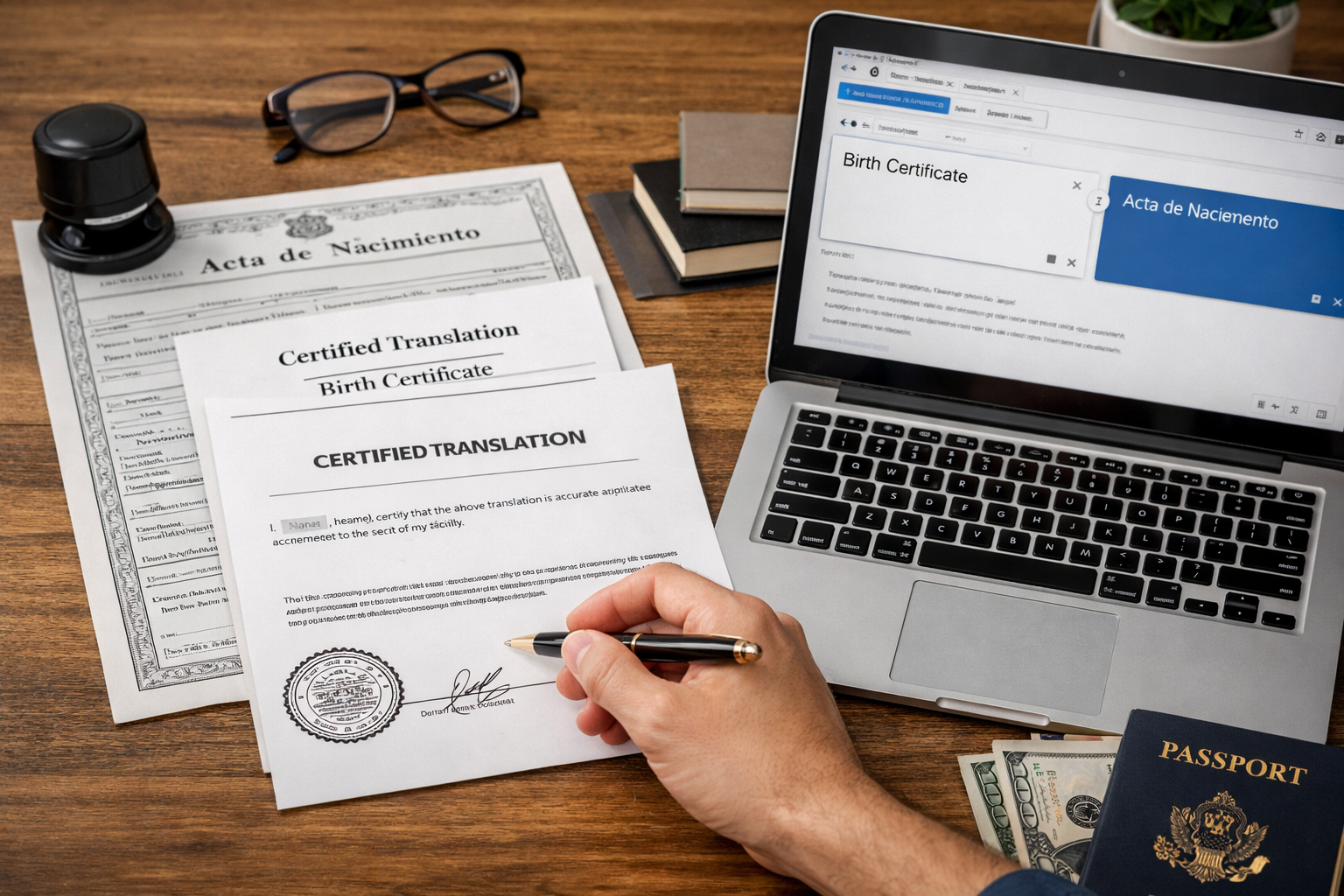
Table of Contents
-
- 1.Summary
- 2.Understanding the Importance of Translating a Birth Certificate
- 3.Key Steps in Translating a Birth Certificate from Spanish to English
- 4.Common Challenges and How to Overcome Them
- 5.Why You Should Use Professional Spanish Translation Services
- 7.Conclusion
- FAQs
Summary
Translating a birth certificate from Spanish to English may seem straightforward, but it comes with important legal and cultural considerations. Mistakes in translation can cause delays, rejections, or even legal issues, especially when dealing with official documents. Whether you are applying for immigration, processing legal paperwork, or fulfilling other requirements, a certified translation ensures accuracy and compliance. In this blog, we’ll guide you through the steps to properly translate a birth certificate and explain why using professional Spanish translation services is crucial for getting it right.
1. Understanding the Importance of Translating a Birth Certificate
A birth certificate is one of the most vital documents used for various official purposes, including immigration, identity verification, and legal matters. When this document is in Spanish and you need to submit it to English-speaking authorities, an accurate translation is critical.
Key Insight: The accuracy of your birth certificate translation is paramount. Even small mistakes can lead to delays or even legal consequences. For example, immigration authorities require certified translations to ensure that the document is legally valid and accurate for processing.
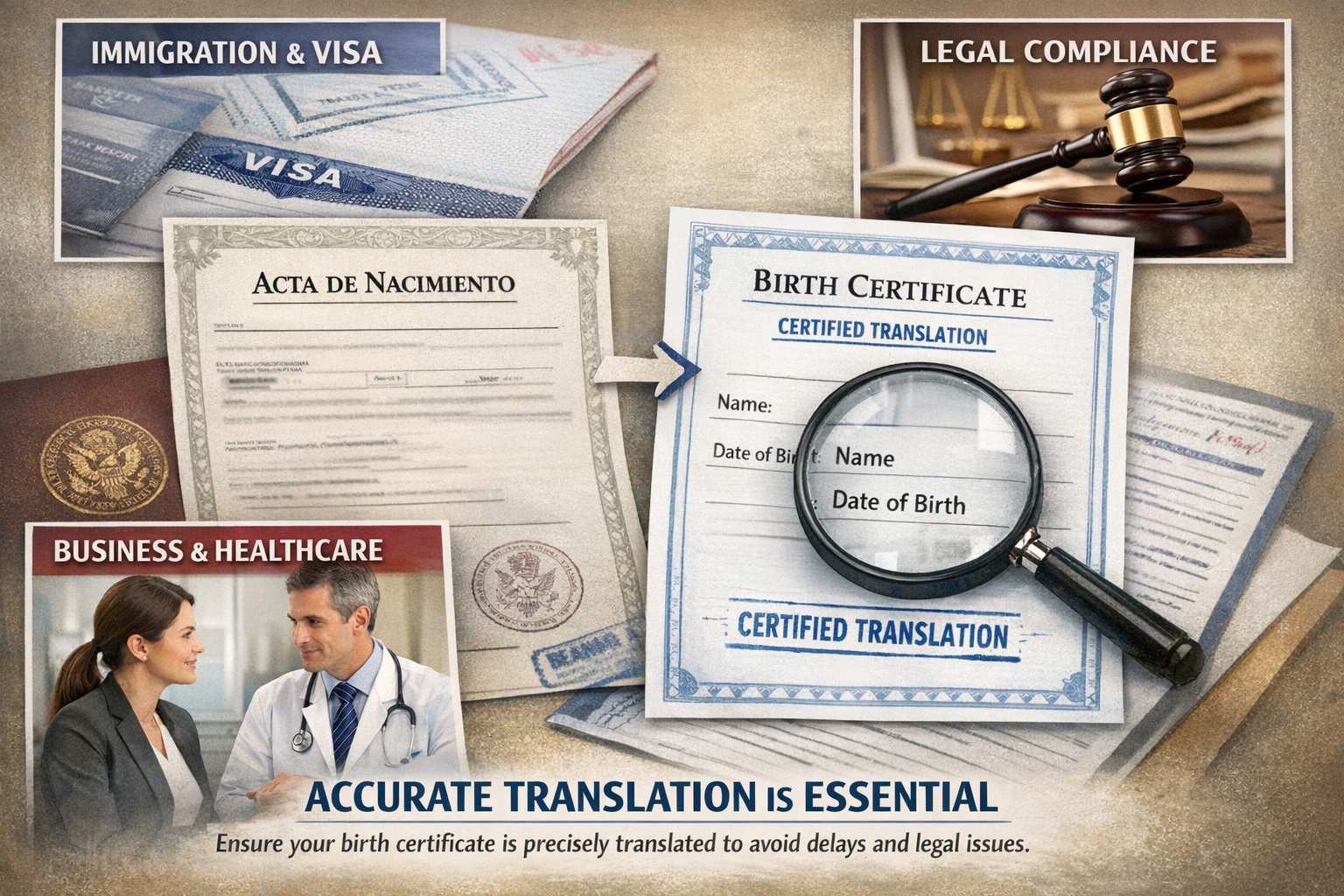
- Immigration Requirements: Many visa, citizenship, or residency applications require an official English translation of your birth certificate.
- Legal Compliance: Translating your birth certificate accurately ensures compliance with official requirements and prevents the risk of document rejection.
- Business and Healthcare: Correct translations are also crucial in business and healthcare when verifying identity or citizenship status.
2. Key Steps in Translating a Birth Certificate from Spanish to English
When translating a birth certificate from Spanish to English, there are several important steps to follow to ensure the translation is accurate, certified, and legally compliant.
Key Insight: While it’s possible to attempt the translation yourself, using a certified Spanish translator ensures that the translation meets legal standards and is accepted by authorities.
- Step 1: Gather the Original Document
Make sure you have a clear, legible copy of the original birth certificate in Spanish. This will help prevent errors during translation. - Step 2: Understand the Document’s Content
Birth certificates contain specific terms and data, including names, dates, places, and official designations. Familiarize yourself with the relevant terms in both languages to avoid misinterpretation. - Step 3: Translate the Document
Begin the translation by carefully converting the text into English. Pay attention to names, titles, and official terms, ensuring they align with recognized English equivalents.
- Step 4: Certification
If the translation is intended for legal or immigration purposes, ensure the translation is certified. A certified translation guarantees that the translation is accurate and complete.
3. Common Challenges and How to Overcome Them
While translating a birth certificate may sound straightforward, several challenges can arise that could affect the accuracy or legality of your translation.
Key Insight: Professional translators are equipped to handle these challenges and ensure your birth certificate translation is legally compliant.
- Cultural Differences in Naming ConventionsIn many Spanish-speaking countries, names may be written differently than in English, with multiple last names or titles like "Sr." or "Sra." Understanding the cultural context of naming conventions helps ensure proper translation.
- Accuracy in Dates
The format of dates may vary between Spanish and English, particularly in terms of day, month, and year order. This must be correctly adapted in the translation to match English-speaking norms.
4. Why You Should Use Professional Spanish Translation Services
Many people may attempt to translate documents on their own, but birth certificates require precise and professional translations, especially for legal purposes.
Key Insight: Using professional Spanish translation services ensures that the translation is not only linguistically accurate but also legally valid for submission to immigration authorities, courts, or other institutions.
- Accuracy and Precision Professional translators understand the nuances of both languages and ensure that all technical terms are translated correctly, avoiding mistakes that could invalidate your document.
- Certified Translations For official use, many institutions require certified translations. These translations include a statement from the translator certifying the accuracy of the translation and their qualifications.
- ETime and Cost Efficiency While it might be tempting to do it yourself, a professional translation saves you time and the potential cost of correcting mistakes later on.
5. Conclusion
When translating a birth certificate from Spanish to English, accuracy and attention to detail are paramount. A small mistake can lead to delays or issues with legal and immigration processes. Using certified Spanish translation services ensures that your birth certificate translation is both legally compliant and culturally accurate. For anyone needing to submit a birth certificate for official purposes, investing in professional translation services is a wise decision that will save time, money, and potential headaches down the road.
Key takeaways
-
-
- Professional translation services ensure the accuracy and legal compliance of birth certificate translations.
- Cultural and linguistic differences, such as naming conventions and technical terms, can pose challenges.
- Certified translations are required for official use, especially in legal or immigration matters.
- Using certified translators helps avoid mistakes and delays in legal processes.
-