



























How Linguists Explain What Are the Romance Languages and Their Development

Table of Contents
-
- 1. Introduction: What Are Romance Languages?
- 2. The Origin of Romance Languages
- 3.The Evolution of Romance Languages Over Time
- 4. Key Romance Languages and Their Characteristics
- 5. The Global Impact of Romance Languages
- 6. Conclusion
- 7. Key Takeaways
- 8. FAQs
Summary
Have you ever wondered about the origins of the Romance languages, the family of languages which descended from Latin? In this blog post, we will explore the history of the Romance languages, and why they are important in the modern world for anyone learning a new language, whether you are a language student, a translator, or simply a curious individual interested in learning as much as you can about the world. So why are Romance languages important?
1.What Are Romance Languages? So, what exactly are Romance languages?
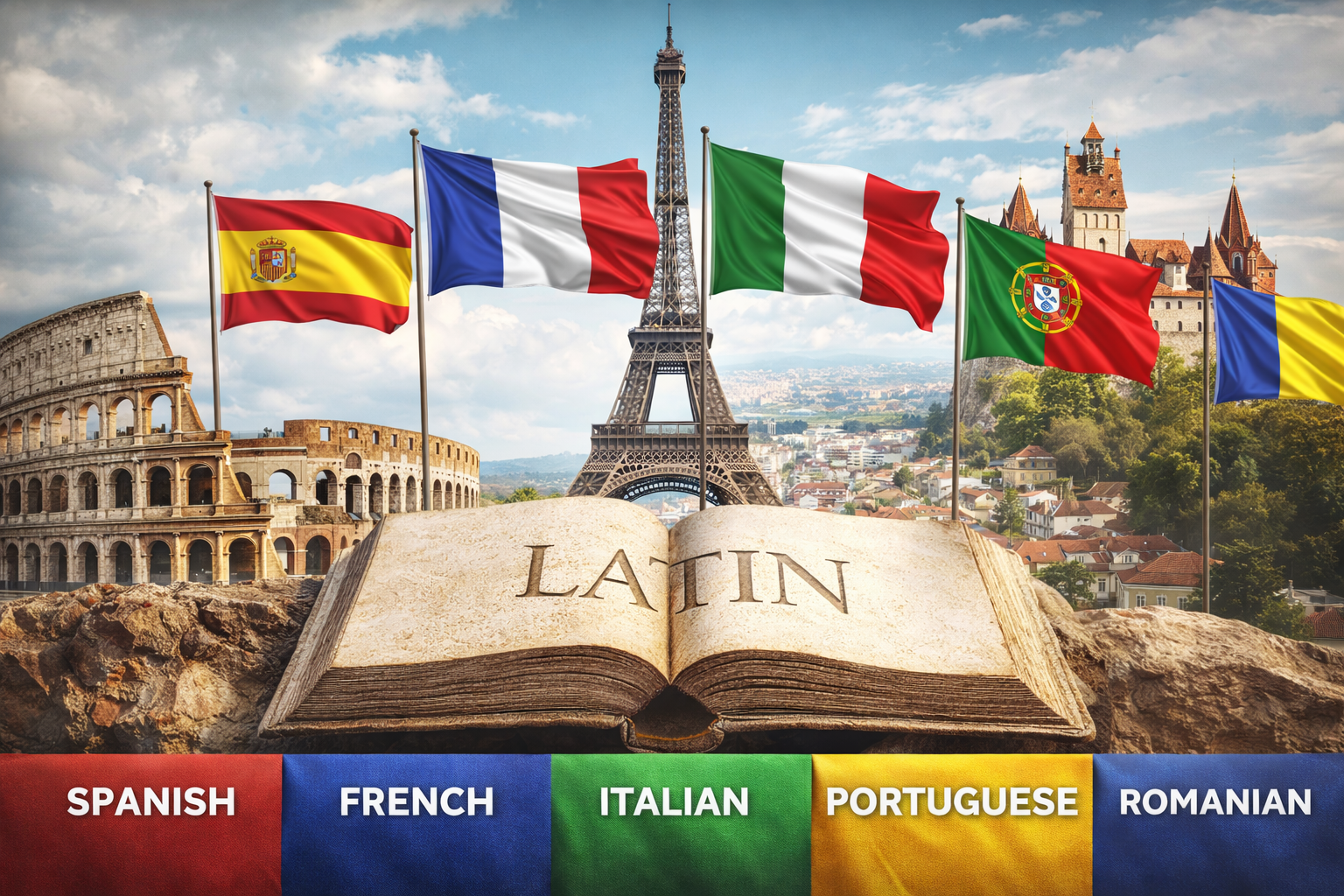
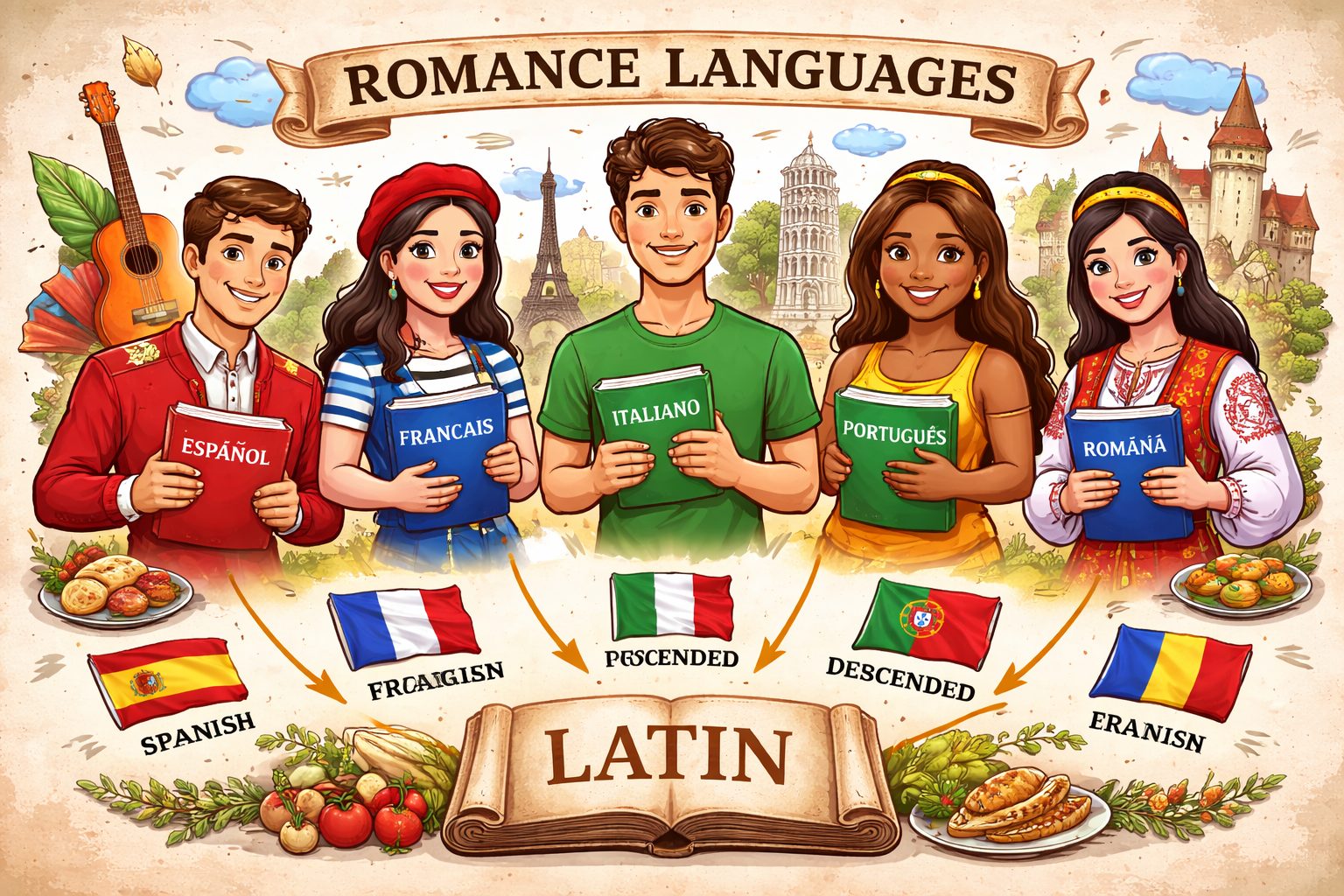
They are those languages which evolved from Latin, the language of the Roman Empire, and have distinct grammatical and lexical similarities to each other as a result. The five most widely-spoken Romance languages are Spanish, French, Italian, Portuguese, and Romanian. Despite their shared heritage, however, each of the Romance languages has developed distinct differences in the centuries since they branched off from Latin, due to a variety of historical, geographical and cultural factors.
2. The Origin of Romance Languages When did the Romance languages originate, and how did they develop?
The origins of the Romance languages can be traced back to the fall of the Roman Empire in the 5th century, when Latin began to change and evolve differently in different regions of the former Empire. Eventually, these regional dialects of Latin, known as Vulgar Latin, developed into distinct languages which could no longer be understood by speakers of other dialects, a process which was more or less complete by the 9th century. Each of the Romance languages has its own unique history and characteristics, shaped by a complex array of invading armies, shifting borders and cultural exchanges. For example:
Spanish was influenced by the Visigoths, Moors and the pre-Roman peoples of the Iberian Peninsula. French emerged from a fusion of Latin and the Germanic language of the Franks who invaded Gaul. Italian is a direct continuation of Latin, but was also influenced by the Etruscan and Greek civilizations which flourished in the Italian peninsula before the rise of Rome.
3. The Evolution of Romance Languages Over Time How did the Romance languages change over time?
As the centuries passed, each of the Romance languages continued to evolve and change, in terms of both pronunciation and grammar. For example, whereas in Old French many of the Latin case endings and grammatical inflections were preserved, in modern Spanish these have developed a more consistent and simplified grammatical structure, including verb conjugations that are still distinct from other Romance languages. In contrast, French and Italian have retained many of these inflections, and as a result have relatively complicated systems of verb conjugation. Other key processes which have affected the development of the Romance languages include:
Changes in pronunciation, such as the way that the Latin letter c developed into an s sound in French. The loss of many of the complicated grammatical cases which existed in Latin, and their replacement with prepositions and definite and indefinite articles.
4.Key Romance Languages and Their Characteristics What are the main characteristics of the key Romance languages?
Despite their shared Latin roots, each of the five most widely-spoken Romance languages has a number of distinct features which shape its grammar, vocabulary and pronunciation. Here are some of the most important features of each language:
Spanish is renowned for its clarity of pronunciation and relatively straightforward grammar, and is widely spoken in Central and South America and the USA, as well as in Spain itself. French is famous for its musical sound and distinctive pronunciation, and for the elaborate system of liaison or linking which exists between words. It has also borrowed extensively from other languages, particularly in terms of Norman and Germanic loan words. Italian is closest to Latin of all the Romance languages in terms of grammar and pronunciation, and has a distinct musicality which is instantly recognizable. Portuguese is closely related to Spanish, but has various differences in pronunciation, vocabulary and grammar, and has been influenced by the languages of Africa and the indigenous peoples of Brazil. Romanian is perhaps the most divergent of all the Romance languages, due to its geographical location in Eastern Europe and the extensive influence it has received from Slavic, Greek, Turkish and Hungarian.
5. The Global Impact of Romance Languages Why are the Romance languages so important today?
The Romance languages play a crucial role in modern life, from international business and diplomacy to academia, literature and the arts. They are the key to communicating with the millions of people around the world who speak them as a native or second language, whether for travel, work or pleasure. In particular, the Romance languages are important for:
Business and trade, as many multinational corporations and international institutions use them as working languages. Culture, as they are the languages of some of the most important literary, artistic and musical works produced in human history, from Don Quixote and Madame Bovary to opera and tango.
Conclusion
In conclusion, the Romance languages have a fascinating history and play a vital role in the modern world. Whether you are interested in learning Spanish for work, French for travel or Italian for pleasure, there are plenty of reasons to get involved with these incredible languages. So which one should you choose? The answer to that question depends on your interests, motivations and goals but is sure to reward you with a rich and fulfilling experience whatever you decide.
Key takeaways
-
-
- Romance languages descend from Latin.
- The key Romance languages are Spanish, French, Italian, Portuguese and Romanian.
- Romance languages are crucial for global communication.
- Learning a Romance language can enhance your career and travel opportunities.
-