




























Real-Time Interpretation vs Certified Document Translation

Table of Contents
- Summary
- 1. Introduction: Real-Time Interpretation vs Certified Translation
- 2. What Is Real-Time Interpretation?
- 3. What Is Certified Document Translation?
- 4. When to Use Real-Time Interpretation vs Certified Translation
- 5. Real-World Scenario: The Importance of Choosing the Right Service
- 6. Conclusion
- FAQs
Summary
When it comes to translating documents or providing communication in different languages, two options often arise: real-time interpretation and certified document translation. But how do you know which one to use? In this blog, we will explore the differences between these two services, their benefits, and how choosing the right one can make a significant difference in your business, legal, or healthcare communication.
1. Introduction: Real-Time Interpretation vs Certified Translation
In a fast-paced world where global communication is key, it's essential to know when to use real-time interpretation and when to rely on certified Spanish translation services. Both services play critical roles in ensuring accurate communication across languages, but they serve different purposes and should be selected based on your specific needs. Whether you're dealing with legal documents, medical records, or business meetings, understanding the difference between these services is crucial.
Imagine a business meeting where both parties speak different languages. Should you rely on an interpreter who translates during the conversation, or should you use a certified translation of the contract ahead of time to ensure accuracy? The choice can impact the outcome of your communication.
2. What Is Real-Time Interpretation?
Real-time interpretation refers to the immediate translation of spoken language during conversations or events. Unlike written translations, interpretation takes place in real-time, allowing people who speak different languages to communicate seamlessly.
There are two main types of interpretation:
- Simultaneous Interpretation: The interpreter translates the speaker's words into the target language almost instantly, with little to no delay. This method is commonly used in conferences, international meetings, or large events.
- Consecutive Interpretation: The interpreter waits for the speaker to finish a sentence or thought and then translates it into the target language. This method is more commonly used in smaller, more personal settings, such as legal consultations or medical appointments.
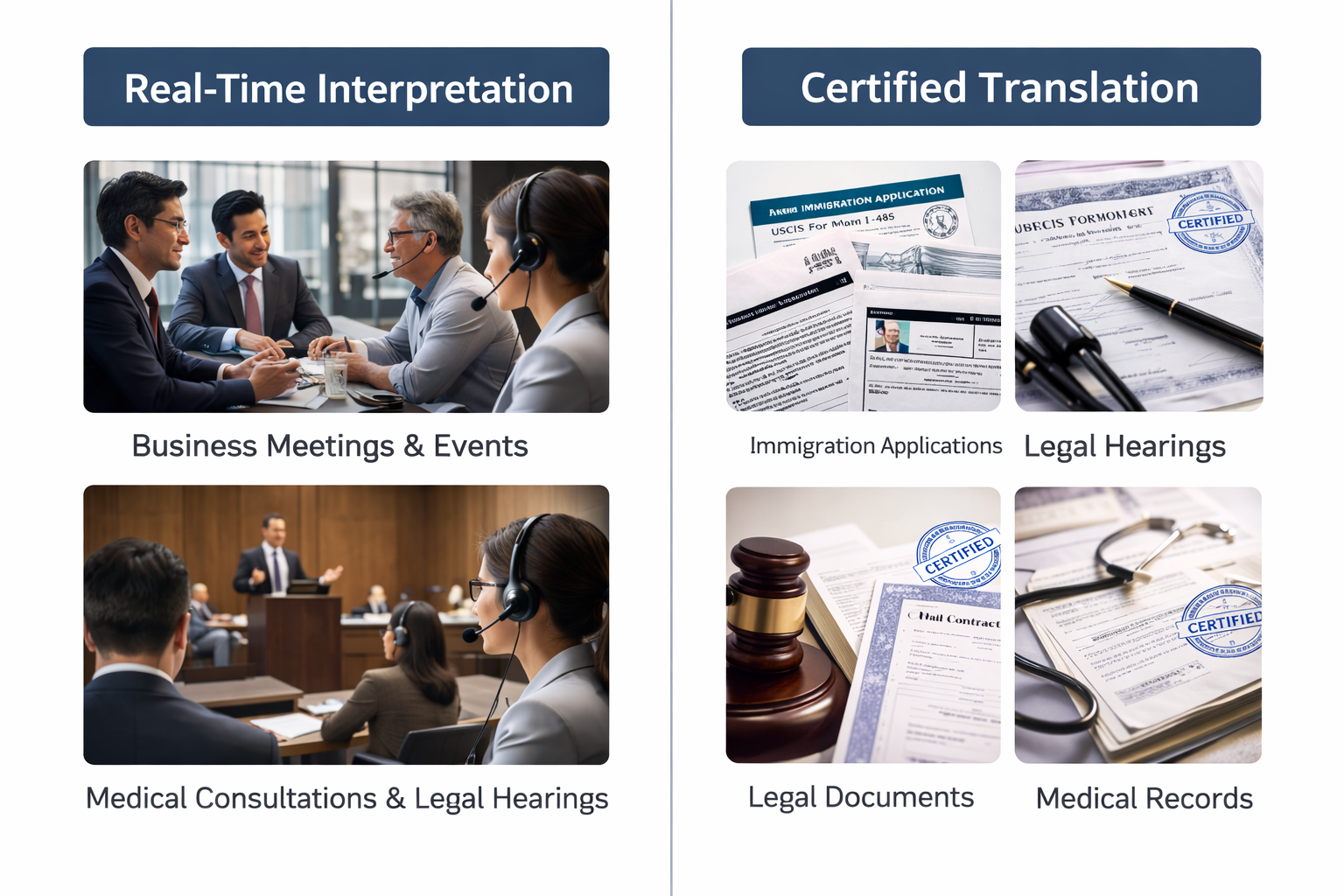
Real-time interpretation is ideal for live, spoken communication, whether it's a court hearing, doctor's appointment, or business negotiation.

3. What Is Certified Document Translation?
Certified document translation involves translating written documents, ensuring that they are accurately translated and meet specific legal or official requirements. A certified translation comes with a declaration by the translator that the translation is accurate and complete. This certification is crucial when submitting documents for official purposes such as:
- Immigration applications: Documents like birth certificates, marriage certificates, and academic records need certified translations for USCIS.
- Legal contracts: Any agreement, from business contracts to court documents, requires certified translations to be legally valid.
- Medical records: Accurate translations of medical documents are essential for patient care, ensuring no miscommunication occurs during treatment or diagnoses.
- Certified translations ensure that documents are not only translated accurately but also meet the legal requirements needed for official use.
4. When to Use Real-Time Interpretation vs Certified Translation
Choosing between real-time interpretation and certified translation services depends on the situation at hand. Here’s when to use each:
- Real-Time Interpretation: This is the right choice for spoken communication in real-time settings. Use this service for:
- Business meetings, conferences, or events where participants need to understand each other instantly.
- Medical consultations or legal hearings where immediate interpretation of discussions is necessary.
- Simultaneous or consecutive translation during in-person or virtual events.
- Certified Document Translation: Use this service when dealing with official written documents that need to be submitted for legal, immigration, or medical purposes. Examples include:
- Contracts, certificates, and forms that must be legally recognized.
- Immigration applications requiring certified translations of personal documents.
- Legal documents such as wills, contracts, or court rulings needing official verification for international use.
5. Real-World Scenario: The Importance of Choosing the Right Service
In a real-world scenario, a healthcare provider needs to provide accurate medical records for a patient who speaks Spanish. If the healthcare provider uses real-time interpretation during a consultation, the interpretation ensures that both the doctor and patient understand each other clearly in real-time. However, if the doctor needs to send the patient's medical records to a specialist or insurance company, those records must be certified translations to ensure they are legally valid and meet industry standards.
Another scenario involves a business negotiating a contract with an international partner. The contract needs to be translated accurately and officially to avoid any legal disputes down the line. In this case, certified document translation is essential, as the contract must be legally binding and precise.Conclusion
Both real-time interpretation and certified Spanish translation services are crucial in different contexts. Understanding when to use each service ensures accurate communication and prevents costly mistakes. Whether you're dealing with live conversations or legal documents, the key is choosing the right translation service to meet your needs.
If you need certified translations for your legal documents or require professional Spanish translation services, The Spanish Group is here to help. Our team of certified experts guarantees that all your documents are translated with precision and legally validated.
Key takeaways
- Real-time interpretation is ideal for live, spoken communication, while certified translations are necessary for official, written documents.
- Choose real-time interpretation for meetings, consultations, or events that require immediate communication.
- Opt for certified document translation when dealing with legal, immigration, or medical documents that need to be officially recognized.
FAQs
Question 1: What’s the difference between real-time interpretation and certified translation?
Question 2: Can AI be used for real-time interpretation?
Question 3: When should I choose certified translations for legal documents?
Question 4: How long does it take to get a certified translation?
Question 5: Can I use a translation app for official documents?
- Real-Time Interpretation: This is the right choice for spoken communication in real-time settings. Use this service for: