




























Hyper-Localized Certified Spanish Translations for U.S. Regional Audiences

Table of Contents
-
- 1.Introduction: Why Hyper-Localized Translations Matter
- 2. Understanding Regional Spanish Dialects
- 3. Challenges in Regional Spanish Translations
- 4. Benefits of Hyper-Localized Certified Spanish Translations
- 5. How Hyper-Localized Translations Improve Business and Legal Outcomes
- 6. Conclusion
- 6. Key Takeaways
- 7. FAQs
Summary
Hyper-localized certified Spanish translations are crucial for effective communication in regions with unique Spanish-speaking populations. Whether you're in a legal, healthcare, or business setting, using the right dialect and culturally appropriate language ensures your message is understood. In this blog, we’ll explore the importance of hyper-localized translations and how they impact U.S. audiences.
1. Introduction: Why Hyper-Localized Translations Matter
You might be familiar with the concept of Spanish translation services, but have you considered the importance of hyper-localized translations? The Spanish spoken in Miami is not the same as the Spanish spoken in Los Angeles, and a generic translation could lead to misunderstandings, missed opportunities, and even legal issues. In today’s globalized world, one-size-fits-all translations just don’t cut it.
For business owners, legal professionals, healthcare providers, and other decision-makers, using a translation service that understands regional dialects, slang, and cultural context is essential. A certified Spanish translation service that can adapt to regional variations not only ensures accurate communication but also builds trust with your audience.
2. Understanding Regional Spanish Dialects
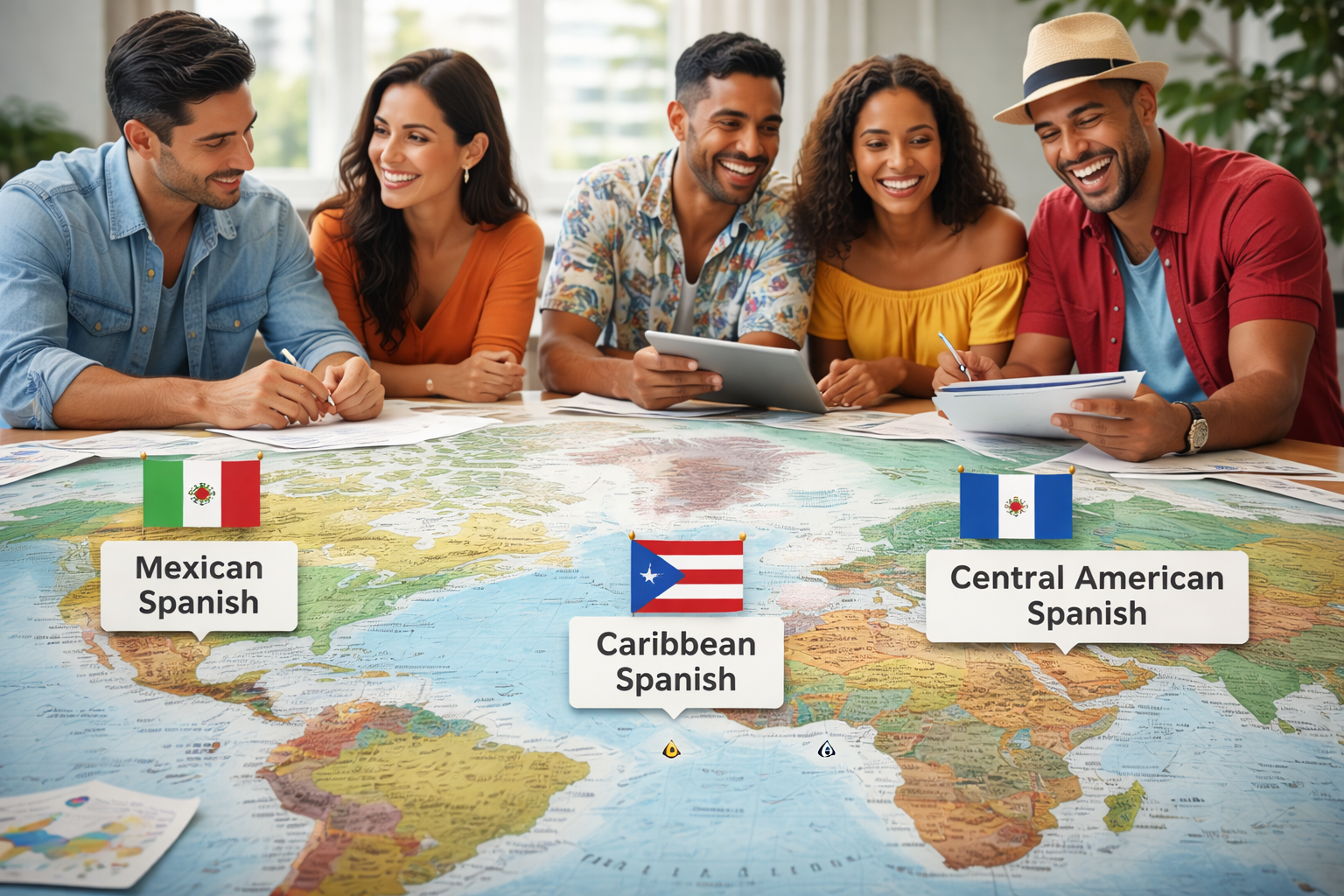
The United States is home to a diverse Spanish-speaking population, and while the formal Spanish language remains consistent, there are significant regional differences that can impact communication. For example, Mexican Spanish, Caribbean Spanish, and Central American Spanish all have unique idiomatic expressions, vocabulary, and accents. These differences are often influenced by culture, history, and geography.
-
- Mexican Spanish is widely spoken in the U.S., with its own set of slang terms and expressions.
- Caribbean Spanish, spoken in Puerto Rico, Cuba, and the Dominican Republic, uses faster speech and unique terms.
- Central American Spanish has specific grammatical structures and vocabulary differences compared to other regions.
Incorporating these nuances into translations helps ensure your message resonates with the specific regional audience you intend to reach.
3. Challenges in Regional Spanish Translations
The key challenge in regional Spanish translations lies in understanding and addressing cultural and dialectical variations. Here are some issues that may arise:
- Misunderstanding regional slang or expressions: Using words or phrases that are common in one region but unfamiliar or inappropriate in another can cause confusion or offense.
- Incorrect grammar or conjugation: Regional Spanish uses different verb tenses, contractions, and even sentence structures. A translation that doesn't account for this may sound awkward or unnatural.
- Overlooking cultural references: Cultural context is just as important as the language itself. Translating a legal document or marketing material without considering the local customs or laws can lead to legal liabilities or misunderstandings.
Hiring a professional Spanish translation service that specializes in hyper-localized translations can help overcome these challenges.
4. Benefits of Hyper-Localized Certified Spanish Translations
Why should you invest in hyper-localized translations for your U.S. Spanish-speaking audience? The benefits are clear:
- Accuracy and Clarity: Hyper-localized translations capture the nuances of regional dialects, ensuring the translation is both accurate and understandable for your specific audience.
- Cultural Relevance: These translations take into account local customs, idioms, and expressions, making your documents, marketing, or communication feel more personal and culturally aware.
- Legal Compliance: For businesses, government agencies, or healthcare providers, hyper-localized translations ensure compliance with U.S. regulations, such as those from USCIS or healthcare mandates like HIPAA. Incorrect or generalized translations could result in rejected applications or legal complications.
- Better Engagement: Whether you are creating marketing materials or internal communications, using the right regional Spanish ensures that your audience feels seen and valued, which can lead to higher customer engagement and trust.
<

5. How Hyper-Localized Translations Improve Business and Legal Outcomes
Hyper-localized certified Spanish translations offer measurable benefits for businesses and legal services. Here’s how they can improve your outcomes:
- Business Impact: For marketing or advertising campaigns, using the correct regional Spanish makes your message more effective. For example, the use of Caribbean Spanish in marketing materials targeting Puerto Rican communities can significantly increase customer interest and response rates. In contrast, using a generalized translation may alienate that audience.
- Legal and Immigration Services: In the legal realm, hyper-localized translations are crucial for accurate contract interpretations, immigration applications, and other legal documents. For instance, a birth certificate translation from Mexican Spanish may require different phrasing or terminology than one from Colombian Spanish, depending on the intended jurisdiction.
- Healthcare Services: For healthcare providers, translating medical records, instructions, or consent forms using regional dialects helps improve patient comprehension and reduces risks. For instance, the Spanish spoken in Miami might need different terms for certain medical procedures than the Spanish spoken in California.
The Spanish Group offers certified Spanish translation services that specialize in hyper-localized translations to ensure accuracy and compliance with industry standards.
Conclusion
When translating important documents, whether for business, legal, or healthcare purposes, the need for hyper-localized certified Spanish translations cannot be overstated. Using a generalized translation approach may risk alienating your audience, miscommunicating your message, or even facing legal consequences.
For accurate and culturally appropriate translations, turn to The Spanish Group. We offer Spanish translation services that cater to your specific regional audience, ensuring that your documents are not only correct but resonate with your target market.
Key takeaways
- Hyper-localized translations are necessary to effectively communicate with regional Spanish-speaking populations in the U.S.
- Certified Spanish translation services ensure that your documents meet legal and business standards.
- Investing in regional dialect-specific translations improves engagement and reduces the risk of misunderstandings.