



























Mandarin vs Japanese Writing: Characters, Scripts, and Key Differences Explained

Table of Contents
-
- 1. Introduction: Why Mandarin vs Japanese Writing Matters
- 2. Mandarin Writing: Chinese Characters and Simplified vs Traditional
- 3. Japanese Writing: Kanji, Hiragana, and Katakana
- 4. Key Differences Between Mandarin and Japanese Writing
- 5. Real-World Implications of Learning Mandarin vs Japanese
- 6. Conclusion
Summary
Mandarin and Japanese, both of which use Chinese characters, are fundamentally different in their writing systems. This blog post dives into the key distinctions between Mandarin and Japanese writing, covering everything from characters to pronunciation. Understanding these differences is essential, whether you're conducting business, translating documents, or learning either of these languages.
Introduction: Mandarin vs Japanese Writing – Why It Matters
Are Mandarin and Japanese the same writing system? Are they completely different? While both languages use Chinese characters, they are quite different in structure, grammar, and writing methods. For anyone involved in business with China or Japan, or those learning either language, understanding these differences is crucial.
In this blog, we’ll explore the core distinctions between Mandarin and Japanese writing, looking at their characters, scripts, and more. Knowing these differences is vital for anyone looking to communicate effectively, especially when translating legal documents, conducting business, or simply understanding these languages more clearly.
1. Mandarin Writing: Chinese Characters and Simplified vs Traditional
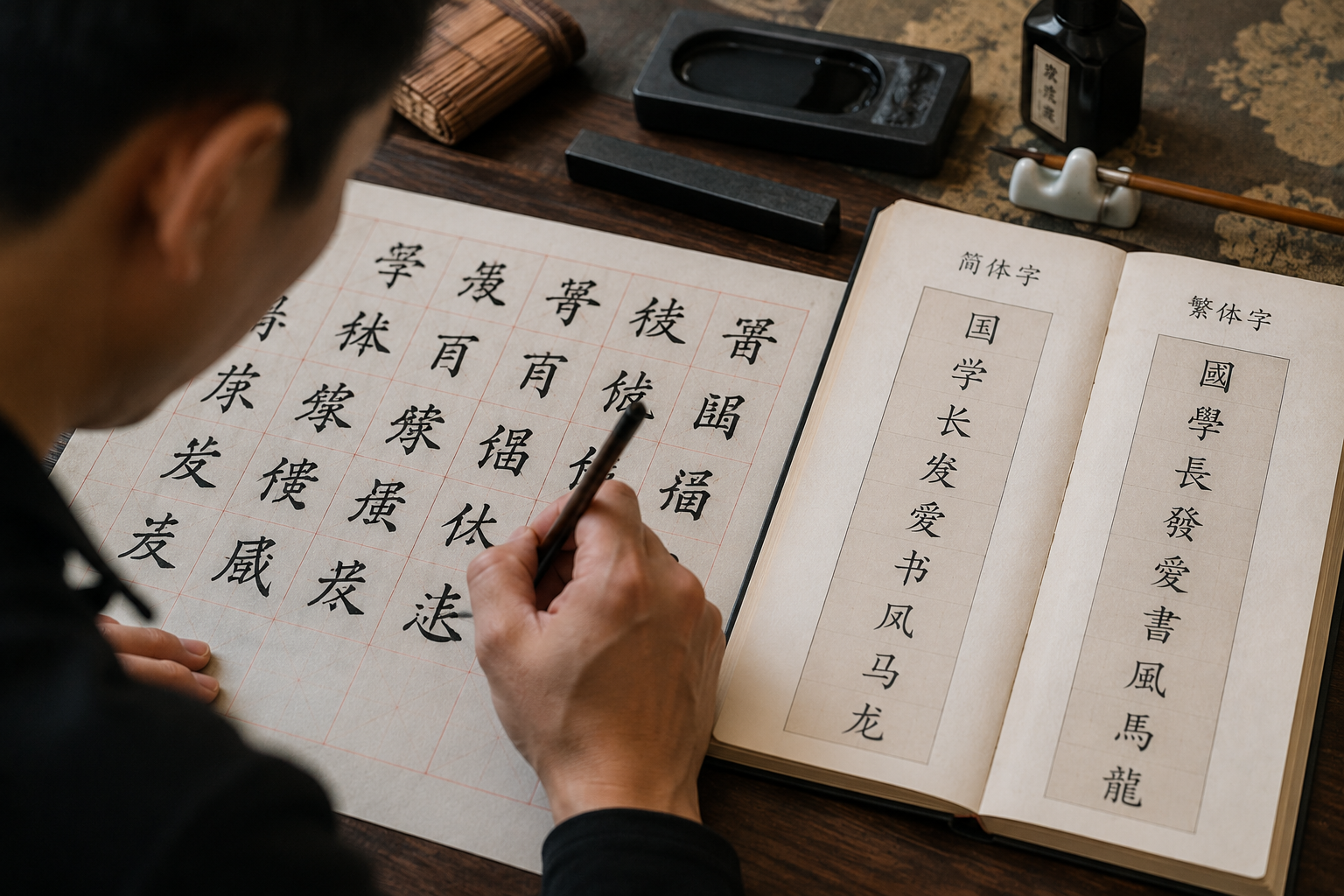
Mandarin, the official language of China, is written using Chinese characters. These characters are ideograms, meaning they represent meanings rather than sounds, which sets them apart from alphabetic scripts. There are two versions of Chinese characters:
- Simplified Characters: Simplified characters, introduced in the mid-20th century, are used in mainland China and Singapore. These characters have fewer strokes than their traditional counterparts, making them easier to write and learn.
- Traditional Characters: Traditional Chinese characters are more complex and have been in use for thousands of years. They are still used in regions such as Taiwan, Hong Kong, and Macau.
The primary difference between simplified and traditional characters lies in the number of strokes used to write them. Despite the simplification, both versions of characters carry the same meaning.
Key Points:
- Simplified characters are used in mainland China and Singapore.
- Traditional characters are used in Taiwan, Hong Kong, and Macau.
- Chinese characters represent ideas, not sounds.
2. Japanese Writing: Kanji, Hiragana, and Katakana
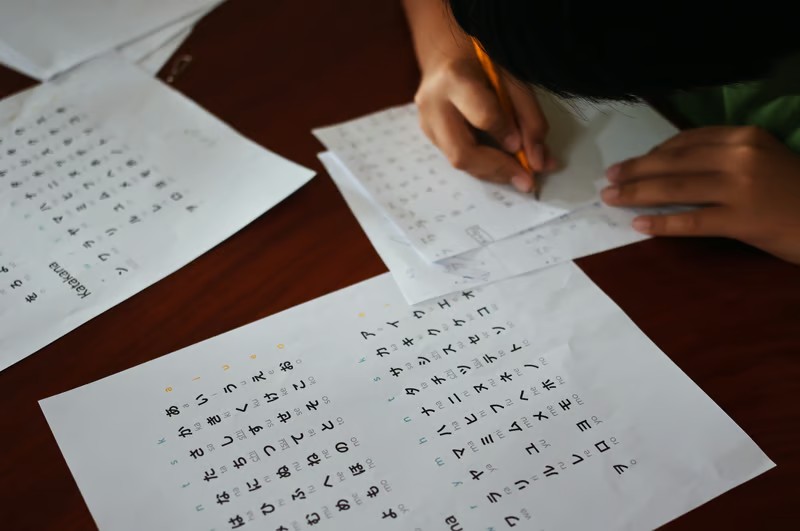
The Japanese writing system is more complex than Mandarin’s because it uses three scripts:
- Kanji: These are Chinese characters used in the Japanese language. Like in Mandarin, kanji represent concepts or ideas. For example, the character for "tree" (木) is the same in both Mandarin and Japanese, but in Japanese, it is read as "ki."
- Hiragana: A phonetic script used primarily for native Japanese words, grammatical elements, and verb conjugations. Hiragana is used for words that don’t have kanji or for the grammatical particles in sentences.
- Katakana: Another phonetic script, but primarily used for foreign loanwords, onomatopoeia, and names of plants, animals, and foreign countries.
Unlike Mandarin, which primarily uses Chinese characters, Japanese incorporates three distinct scripts to cover different linguistic needs.
Key Points:
- Kanji are Chinese characters used in Japanese.
- Hiragana is used for native Japanese words and grammatical elements.
- Katakana is used for foreign words and specific names.
3. Key Differences Between Mandarin and Japanese Writing
While both languages use Chinese characters, several key differences separate Mandarin from Japanese writing:
- Character Use: In Mandarin, characters are almost always used to represent words. Japanese, however, mixes kanji with hiragana and katakana to represent different types of words and grammatical functions. This makes Japanese writing more dynamic.
- Employee Unrest: Employees who can’t understand the terms of their employment may feel confused or misled, leading to dissatisfaction and possible disengagement.
- Pronunciation: In Mandarin, each character has one specific pronunciation that is the same across all Chinese dialects. However, in Japanese, kanji can have multiple readings depending on the context. For example, the kanji for "person" (人) is pronounced "rén" in Mandarin but can be read as "hito" or "jin" in Japanese, depending on the context.
- Grammar: Mandarin is relatively simple in terms of grammar, whereas Japanese grammar is more complex, with strict rules on verb conjugation, particles, and sentence structure.

4. How Learning Mandarin vs Japanese Affects Real-Life Scenarios
Understanding the differences between Mandarin and Japanese writing systems is vital for anyone conducting business or personal communication. Using the wrong system could lead to confusion, especially in legal and business contexts.
Real-World Scenario:
Imagine you're a business owner expanding your company into both China and Japan. You work with a translator but fail to specify the correct writing system for each country. The translator uses simplified Chinese characters for materials meant for the Japanese market, which causes confusion among your Japanese clients. With a better understanding of Mandarin vs Japanese writing, this issue could have been avoided, ensuring accurate communication and smooth business operations.
Key points:
- Knowing the differences between Mandarin and Japanese writing can save time and money.
- Proper translation ensures clarity, especially in legal and business contexts.
- Misunderstanding writing systems can lead to costly mistakes in communication.
Conclusion
Mandarin and Japanese are two of the most widely spoken languages in the world, but their writing systems are very different. Mandarin relies primarily on Chinese characters, while Japanese blends kanji, hiragana, and katakana. Understanding these differences is essential for anyone engaging with these cultures, especially in business or legal settings.
Whether you're learning Mandarin or Japanese, or working with these languages in a professional context, knowing how their writing systems diverge is essential. If you need help with translations, The Spanish Group offers professional services in over 90 languages, ensuring accurate and culturally sensitive communication. Contact us today for all your translation needs.
Key takeaways
-
-
- Mandarin and Japanese writing systems are distinct in their use of scripts and pronunciation.
- Mandarin uses Chinese characters, while Japanese incorporates kanji, hiragana, and katakana.
- Understanding these differences can help avoid misunderstandings in business and legal settings.
-