



























Legal Translation Services for Accurate & Certified Document Translation

Table of Contents
-
- 1. Summary
- 2. Why Legal Translation Services Matter in High-Stakes Situations
- 3. AI vs Human Expertise in Legal Translation
- 4. What Makes Legal Translation Legally Valid
- 5. Risks of Poor or Inaccurate Legal Translation
- 6. Real-World Scenario: When a Translation Error Becomes a Legal Crisis
- 7. Conclusion
- 8. Key Takeaways
- 9. FAQs
Summary
A single translation error can change the meaning of a contract, delay an immigration case, or expose a company to legal liability.
Many organizations assume AI tools alone are enough for legal documents—but that assumption can lead to serious consequences.
Modern legal translation services combine artificial intelligence with human legal expertise to ensure accuracy, compliance, and official acceptance. This article explains how these services work, why precision matters, and how to avoid risks that often surface only after it is too late.
Why Legal Translation Services Matter in High-Stakes Situations
Legal documents are not just words on paper—they represent enforceable rights, obligations, and responsibilities. When translated incorrectly, even a single word can change legal meaning and lead to serious consequences.
This is why legal translation services are essential for immigration cases, corporate agreements, court filings, and regulatory compliance.
For example:
- A contract mistranslation can shift liability between parties.
- An immigration error can result in USCIS delays or denial.
- A legal affidavit mistake can be challenged in court.
According to official USCIS guidance, all foreign-language documents must include complete and accurate English translations to be accepted during immigration processes. Incomplete or uncertified translations may result in Requests for Evidence (RFEs) or rejection.
In the United States legal system, clarity is not optional—it is enforceable. That means translation quality directly affects legal outcomes.
Professional Spanish legal translation services ensure that meaning, intent, and legal structure are preserved—not just the words themselves.

Artificial Intelligence vs Human Experts in Translation
Artificial intelligence has transformed translation speed and accessibility, but legal language requires far more than speed.
Legal translation demands contextual understanding, jurisdictional knowledge, and precision in terminology.
Most modern professional Spanish translation services use a hybrid model:
- AI generates an initial draft.
- Human legal experts review and refine the translation.
AI is effective at:
- Processing large volumes quickly.
- Identifying linguistic patterns.
- Assisting with terminology suggestions.
However, AI alone cannot reliably interpret:
- Legal nuance and intent.
- Jurisdiction-specific differences.
- Contractual obligations.
- Ambiguous legal phrasing.
For example:
"Shall be liable" implies obligation, while "May be liable" implies possibility.
A small wording difference like this can completely alter legal responsibility.
According to the American Translators Association (ATA), legal translation quality depends primarily on human expertise rather than automation.
The most reliable system today is not AI versus humans—but AI supported by expert human legal validation.
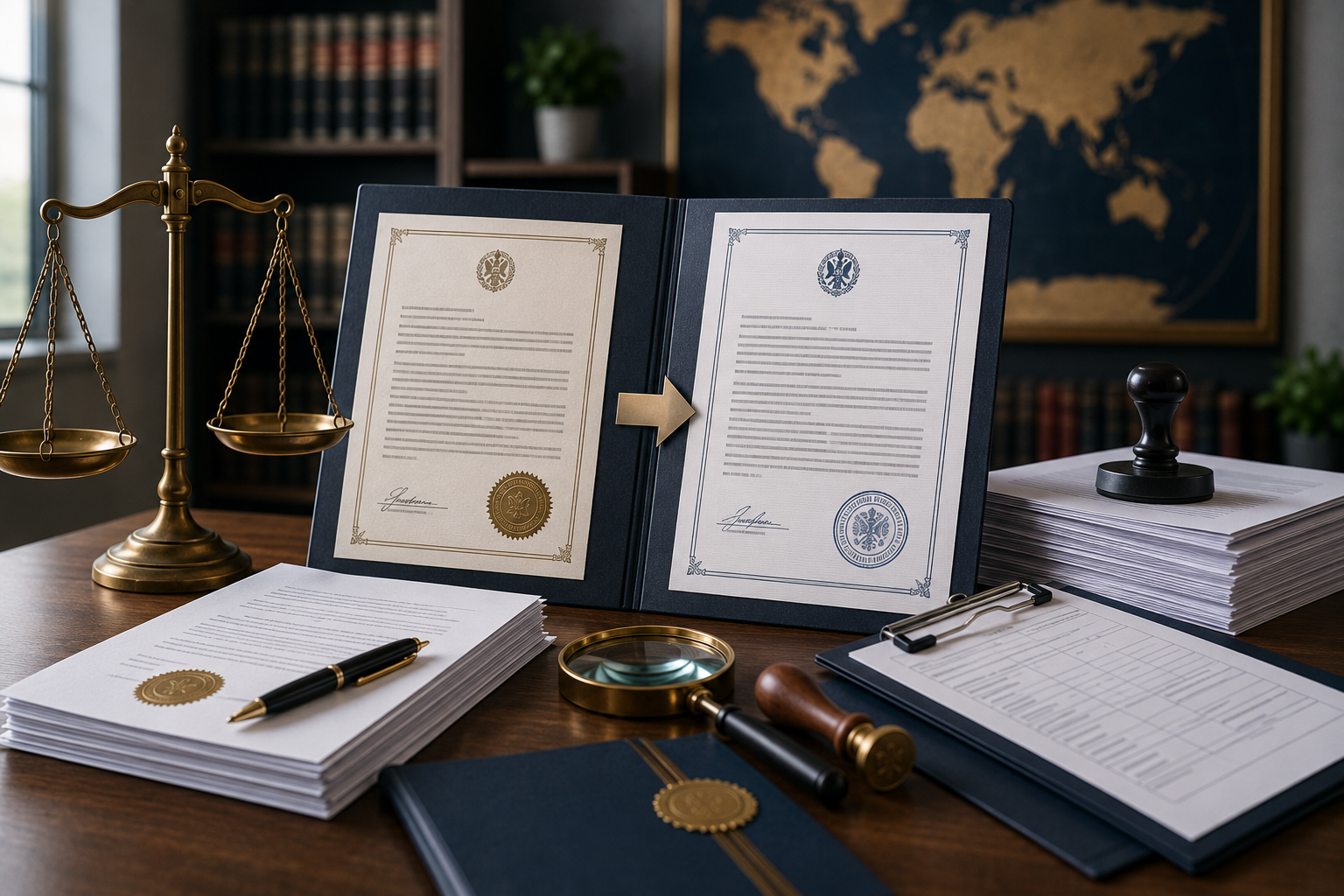
What Makes Legal Translation Legally Valid
Not all translations are legally acceptable. A valid legal translation must meet strict requirements depending on the jurisdiction and its intended use.
A legally valid translation must:
- Be fully accurate and complete.
- Preserve the original meaning without alteration.
- Include a certified translator declaration.
- Maintain the structure and formatting of the original document.
For immigration and official use cases, such as USCIS filings, official translation from Spanish to English must also include:
- A signed certification statement.
- A translator competency declaration.
- Confirmation of accuracy and completeness.
Additional requirements may include:
- Translation of seals, stamps, and handwritten annotations.
- Consistent legal terminology across all related documents.
- Preservation of formatting and document integrity.
Professional providers of legal translation services ensure these standards are met through structured workflows, quality assurance, and compliance validation.
The Spanish Group is a renowned translation company offering services in over 90 languages. No matter the subject or document type, our experts are trained and certified to deliver the highest quality translations.
In legal translation, validity is not simply about language fluency—it is about legal enforceability.
Risks of Poor or Inaccurate Legal Translation
Translation errors in legal documents are not minor—they can result in financial loss, legal disputes, and regulatory consequences.
Common risks include:
- Contract disputes caused by misinterpreted clauses.
- Immigration delays or application denials.
- Regulatory fines and compliance failures.
- Court challenges regarding document validity.
- Financial exposure resulting from contractual misunderstandings.
Even small wording differences can significantly alter legal meaning.
Examples include:
"Must comply" vs. "Should comply"
"Shall terminate" vs. "May terminate"
These subtle variations can completely change enforceability in legal contexts.
Main causes of translation failure include:
- Machine-only translation without human review.
- Lack of legal expertise within translation teams.
- Inconsistent terminology across documents.
- Missing certification statements.
Most organizations discover these problems only after documents have been submitted—when correcting them becomes expensive, time-consuming, or impossible.
That is why legal translation services are not merely operational tools—they are essential risk management systems.
Real-World Scenario: When a Translation Error Becomes a Legal Crisis
A U.S.-based logistics company expands into a bilingual workforce environment. To accelerate onboarding, it relies on an AI translation tool for employment contracts and compliance documents.
Months later, a legal dispute arises following an employee termination. During legal review, attorneys discover that the Spanish version of the employment contract contains inconsistencies in disciplinary language compared to the English version.
The review reveals:
- Inconsistent terminology between language versions.
- Missing legal disclaimers in the translated contract.
- No certified translation validation.
The consequences include:
- Legal proceedings and defense costs.
- Financial settlement payments.
- Internal policy restructuring.
- Mandatory compliance audits.
After the incident, the company transitions to professional Spanish legal translation services, ensuring every legal document is reviewed, certified, and validated before use.
The issue was never the policy—it was the translation.
Conclusion
Legal translation is not simply a linguistic task—it is a legal safeguard.
Modern legal translation services combine AI efficiency with human legal expertise to ensure accuracy, compliance, and reliability. While artificial intelligence improves speed and consistency, human review remains essential to preserve legal meaning, context, and intent.
From USCIS submissions to corporate contracts, choosing the right translation provider directly impacts legal outcomes, financial risk, and organizational credibility.
In legal communication, precision is not optional—it is protection.
Key Takeaways
- Legal translation directly affects the enforceability of official documents.
- AI alone cannot guarantee legal accuracy or compliance.
- Human legal experts remain essential for high-stakes translations.
- Poor translation increases legal, financial, and regulatory risk.
- Certified translation helps ensure official acceptance and legal validity.