




























Key Lessons from a Date Discrepancy in Apostilled Court Records

Table of Contents
-
- 1. Summary
- 2. Why Date Discrepancies in Apostilled Records Matter
- 3. How Apostille and Translation Errors Happen
- 4. Real-World Scenario: When a Small Date Error Creates a Major Delay
- 5. Legal and Compliance Risks You Cannot Ignore
- 6. How to Prevent Apostille and Translation Issues
- 7. Conclusion
- 8. Key Takeaways
- 9. FAQ
Summary
A single incorrect date in apostilled court records can derail immigration applications, legal proceedings, or international business approvals. Many applicants assume apostille certification guarantees accuracy, but translation inconsistencies can still trigger rejection. This article explains why apostille and translation services must work together, how errors occur, and what steps are needed to ensure documents are legally valid across jurisdictions.
Small Errors, Big Legal Consequences
Why Date Discrepancies in Apostilled Records Matter
Apostilled court records are designed to confirm that official documents are authentic so they can be recognized internationally under the Hague Apostille Convention. However, there is a common misconception that causes serious issues:
An apostille confirms authenticity, not accuracy.
This distinction becomes critical when there is a date mismatch between:
- The original court record
- The translated version
- The apostille certificate itself
Even a one-day discrepancy can raise concerns for immigration officers, court officials, or foreign authorities reviewing the documents. In legal review processes, consistency is often just as important as authenticity.
This risk frequently appears in workflows involving apostille and translation services, where documents pass through multiple stages:
- Court issuance of records
- Certified translation
- Notarization
- Apostille certification
According to the Hague Conference on Private International Law, an apostille only verifies the origin of a public document—it does not validate its content or translation accuracy.
This means that if a translation introduces a date inconsistency, the apostille does not correct or override it.
For individuals in the United States dealing with immigration, legal filings, or international business transactions, this creates a hidden risk:
- Documents may appear valid on the surface.
- But fail deeper verification during review.
- And once that happens, delays are almost inevitable.
How Apostille and Translation Errors Happen
Most date discrepancies in apostilled court records are not intentional—they result from process gaps and formatting inconsistencies during document handling.
Here are the most common causes:
1. Multiple handlers of the document
Court records often pass through several entities:
- Court clerks
- Notaries public
- Apostille authorities
- Translation providers
Each transition increases the risk of inconsistency.
2. Manual translation errors
Even certified translators can make mistakes, especially with:
- Different date formats (DD/MM/YYYY vs MM/DD/YYYY)
- Handwritten or unclear court notes
- Stamped or partially legible dates
3. Formatting inconsistencies
During translation, dates may be:
- Standardized incorrectly
- Rewritten for readability
- Accidentally altered in timeline references
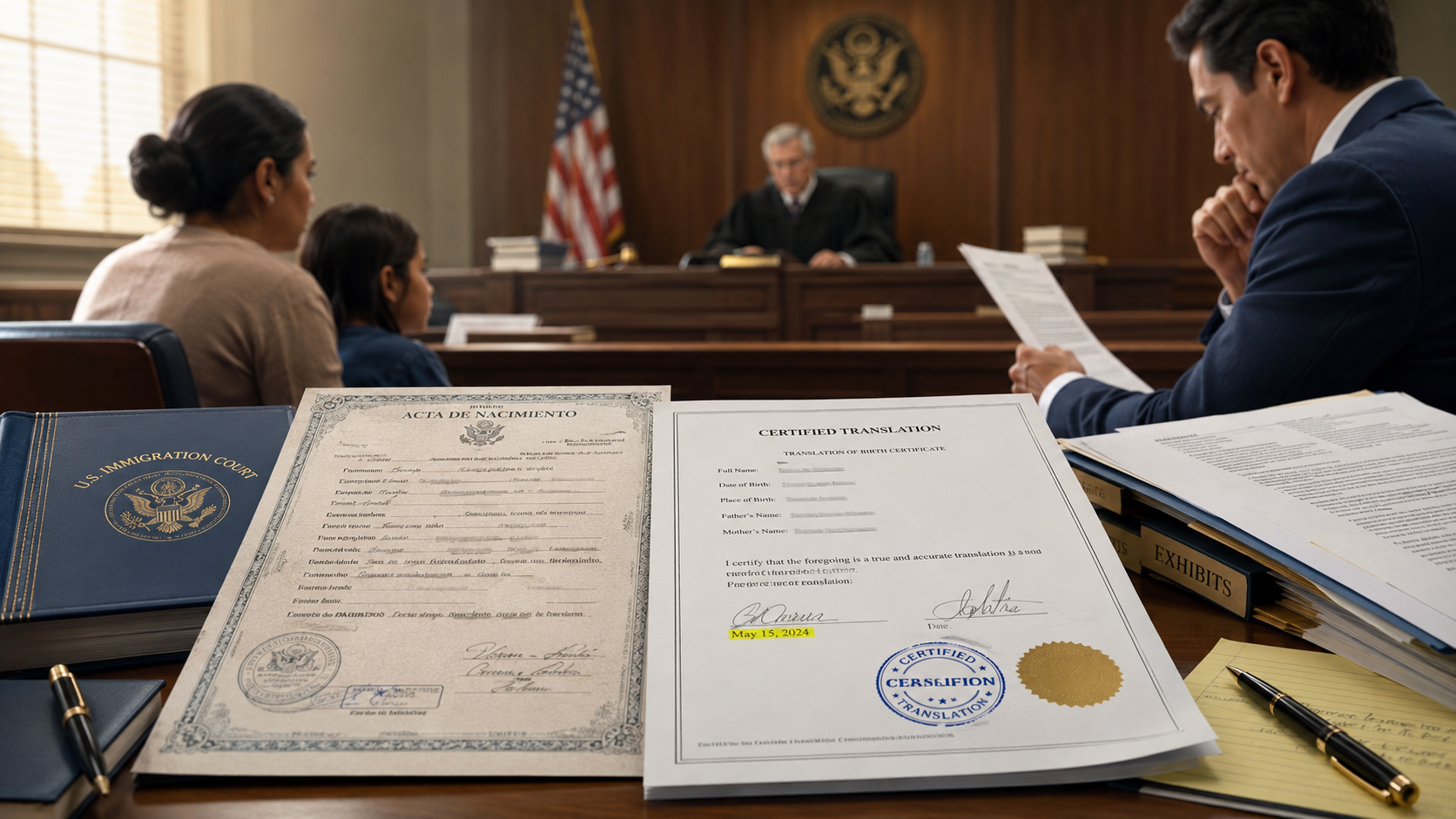
4. Apostille-document mismatch
In some cases, the apostille is attached to a different version of the document than the translated file, creating inconsistencies between:
- Court record date
- Translation date
- Apostille certification date
Why this matters
In both U.S. and international legal systems, consistency across documents is essential. Even minor inconsistencies can lead to:
- Document rejection
- Requests for re-translation
- Extended administrative delays
This is why professional legal translation apostille workflows are essential—they reduce risk through structured verification and expertise.
Real-World Scenario: When a Small Date Error Creates a Major Delay
Consider a real-world case involving an immigration application supported by court records.
The original document states:
Judgment date: 03/05/2023 (March 5, 2023)
However, during translation, the date is interpreted using a different format:
Translated version reads: 03/05/2023 (May 3, 2023)
At first glance, this appears to be a minor formatting issue.
In immigration review, however, it becomes a serious discrepancy.
Consequences:
- Officers question document authenticity.
- Timeline of legal events becomes unclear.
- Case is placed under administrative review.
Outcome:
- Several months of delay.
- Request for corrected translation.
- Additional apostille verification required.
- Increased legal and processing costs.
How professional services prevent this
Certified apostille and translation services mitigate these risks by:
- Standardizing date formats with clear notation.
- Adding translator certification explanations.
- Performing cross-document consistency checks.
- Ensuring apostille and translation alignment before submission.
This is where providers like The Spanish Group play a critical role.
The Spanish Group is a renowned translation company offering services in over 90 languages. No matter the subject or document type, our experts are trained and certified to deliver the highest quality translations.
Legal and Compliance Risks You Cannot Ignore
Date discrepancies in apostilled court records are not minor administrative issues—they carry significant legal consequences.
Key risks include:
1. Document rejection
Authorities may reject documents if inconsistencies suggest alteration or unreliability.
2. Immigration delays
U.S. immigration systems are highly sensitive to document accuracy, and inconsistencies often trigger Requests for Evidence (RFEs).
3. International recognition issues
Foreign courts or institutions may refuse to accept documents with conflicting or unclear dates.
4. Legal credibility concerns
Even unintentional errors can raise doubts about document integrity and authenticity.
Why this happens more often than expected
Because apostilles do not validate translation accuracy, responsibility falls entirely on:
- Translators
- Notaries
- Legal document processors
This makes expertise in apostille and translation services essential for compliance and reliability.
How to Prevent Apostille and Translation Issues
Preventing date discrepancies requires a structured, compliance-driven approach.
Best practices include:
1. Use certified apostille and translation services
Work only with providers experienced in legal documentation and international standards.
2. Standardize date formats early
Clearly define:
- Source format (DD/MM/YYYY or MM/DD/YYYY)
- Target jurisdiction requirements
3. Cross-document verification
Always verify consistency between:
- Original court record
- Certified translation
- Apostille certificate
4. Include translator certification notes
Certified translations should document:
- Source accuracy confirmation
- Translation methodology
- Date formatting explanation
5. Work with legal translation specialists
Experienced providers reduce risks through familiarity with:
- Immigration requirements
- Court documentation standards
- Apostille workflows
Why this matters for compliance
Proper apostille and translation services ensure:
- Cross-border legal acceptance.
- Reduced rejection risk.
- Faster processing timelines.
- Stronger document credibility.
Conclusion
A seemingly small date discrepancy in apostilled court records can create major legal, administrative, and financial consequences. While an apostille confirms the authenticity of a document, it does not guarantee the accuracy of its translated content. This gap is where many immigration, legal, and international business cases encounter avoidable delays.
Understanding how errors occur in legal translation apostille workflows is essential for preventing rejection and ensuring compliance. With multiple stakeholders involved—courts, notaries, translators, and apostille authorities—precision becomes critical at every stage.
By working with professional apostille and translation services, individuals and organizations can ensure consistency, reduce risk, and maintain document integrity across jurisdictions. Providers like The Spanish Group deliver the expertise needed to ensure that every document is accurate, compliant, and legally reliable from start to finish.
Key Takeaways
- Apostilles confirm the origin of a public document, not the accuracy of its translation.
- Date discrepancies can lead to document rejection, processing delays, and legal complications.
- Standardizing date formats and verifying document consistency helps prevent costly errors.
- Certified apostille and translation services ensure compliance, accuracy, and cross-border acceptance.