



























Certified Translations and AI: What No One Tells You

Table of Contents
- Summary
- 1. Introduction: Can Artificial Intelligence Replace Certified Translations?
- 2. Artificial Intelligence in Translations: What It Can and Can't Do
- 3. Certified Translations: The Key to Ensuring Accuracy and Legality
- 4. Risks of Using AI for Legal and Official Translations
- 5. How to Combine AI with Certified Translators for Optimal Results
- 6. Conclusion
- FAQs
Summary
Artificial intelligence is transforming many industries, including document translation. However, when it comes to certified translations, AI has limitations. In this blog, we explore how AI can assist in the translation process and why certified human translators are still essential for legal and official documents.
1. Introduction: Can Artificial Intelligence Replace Certified Translations?
Imagine you need to translate an important legal document such as a contract, birth certificate, or court ruling. Today, AI-powered translation tools like Google Translate and DeepL are available at the click of a button, but can they really replace certified translations when it comes to official documents?
Although AI has improved significantly, in the legal field, a bad translation could cost you more than what you save by choosing a cheap or fast option. In this article, we explore the benefits of AI and why, in many cases, certified translations are still crucial to ensure the accuracy and legality of your documents.
2. Artificial Intelligence in Translations: What It Can and Can't Do
AI is a powerful ally in many fields, and document translation is no exception. Tools like DeepL or Google Translate can translate text quickly and efficiently, especially in less complex areas. However, there are certain limitations that prevent AI from being fully reliable for legal documents:
- Context limitations: AI often struggles with legal context, especially when documents contain technical, legal, or culturally specific terms. While it may translate words correctly, the full meaning of a paragraph can be lost if the context isn't fully understood.
- Lack of cultural understanding: Legal translations don’t just depend on the language, but also on the culture and legal norms of the country. AI doesn’t always take these crucial factors into account.
- Errors in interpreting terminology: Legal or specific terms sometimes don’t have exact equivalents in another language, which could lead to serious translation errors.
- No guarantee of validity: For official documents like visa applications or court processes, translations need to be certified to be accepted by authorities. AI doesn’t provide the necessary certification.
3. Certified Translations: The Key to Ensuring Accuracy and Legality
Certified translations are those completed by professional translators who are certified to translate legal and official documents. Unlike AI, certified translators are experts in legal terminology and understand the importance of every word in a legal context.
By choosing a certified translation service, like The Spanish Group, you ensure that your documents are translated accurately and meet the legal requirements needed to be accepted by USCIS, courts, or any other competent authority.
Certified translations provide:
- Quality guarantee: Certified translators are responsible for the accuracy of the translation.
- Legal validity: Certified translation is necessary for documents to be accepted in official procedures.
- Deep understanding of context: A certified translator has the ability to interpret the context and translate specific terms that AI might overlook.
4. Risks of Using AI for Legal and Official Translations
While AI tools can be useful for obtaining a preliminary translation of less complex documents, using them for legal or official documents presents several major risks:
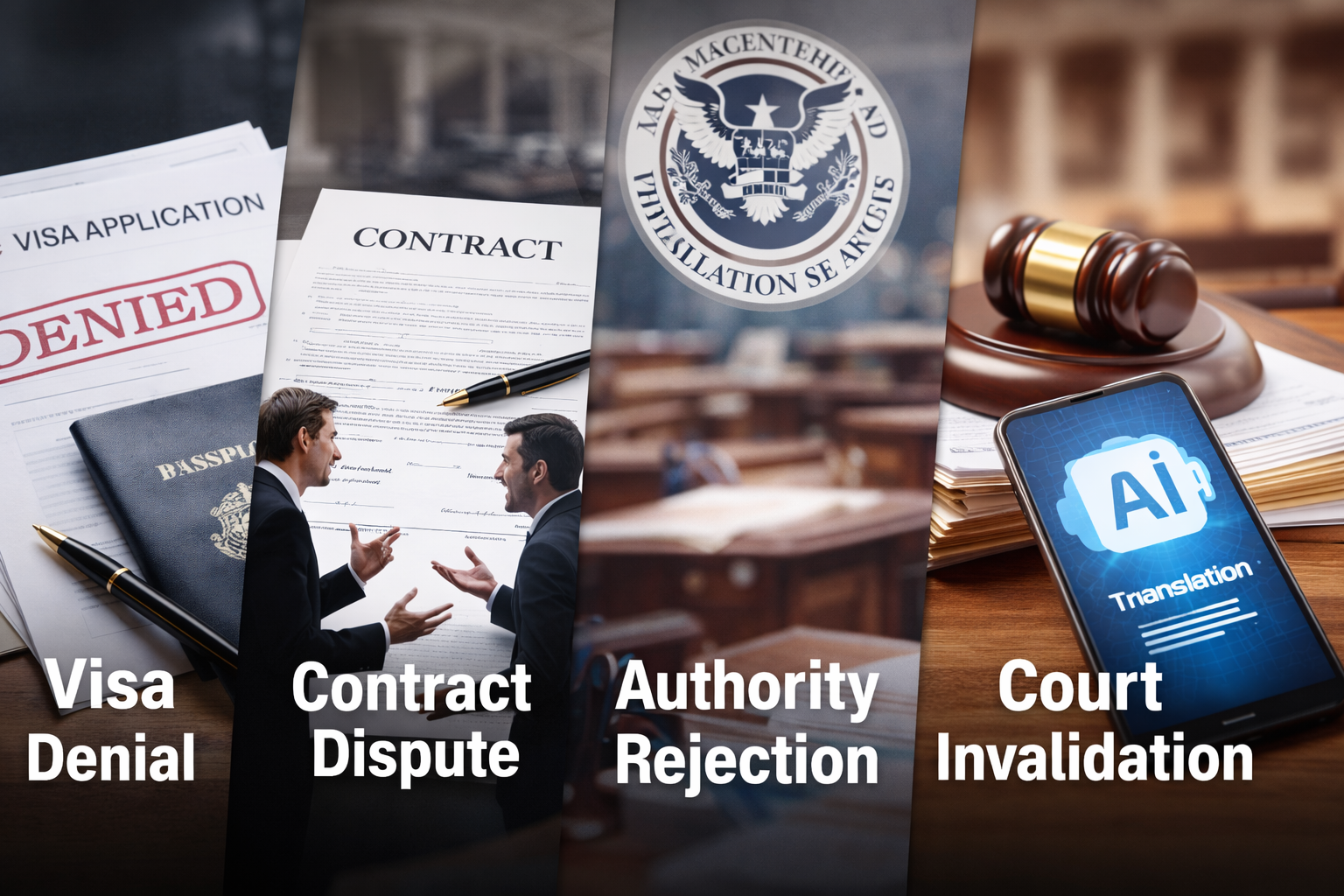
- Errors in the immigration process: A translation error in a document like a birth certificate could result in your visa being denied or delays in your immigration process.
- Contractual issues: If you're signing a contract based on an incorrect translation, you could be committing to terms you didn’t fully understand. This could lead to legal disputes later.
- Lack of acceptance by authorities: Many institutions, like USCIS, do not accept AI-generated translations due to the lack of accuracy and authenticity guarantees.
- Invalidity of documents in court: Incorrectly translated documents may be rejected in court or not considered valid in legal proceedings.
5. How to Combine AI with Certified Translators for Optimal Results
While AI shouldn’t be the sole tool used in translating legal or official documents, it can be useful in the process, especially when a preliminary translation is needed or when translating non-technical content. Here’s how you can make the most of both worlds:
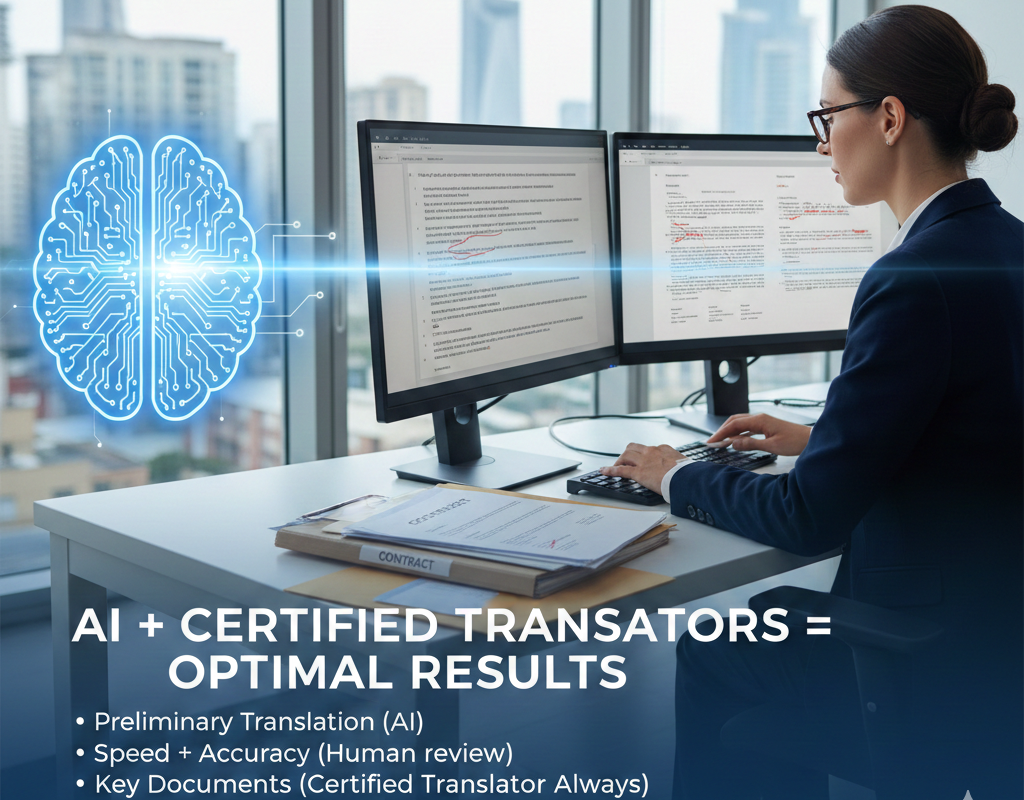
- Use AI for a preliminary translation: You can use AI to quickly translate a text, but make sure a certified translator reviews and corrects the translation before you use it for official purposes.
- Combine speed with accuracy: AI can help you get a quick translation, while the certified translator can fix the details and ensure the translation is accurate and suitable for legal use.
- Avoid relying solely on AI for important documents: For key documents, like contracts, birth certificates, and other legal documents, always use a certified translator to ensure validity.
Conclusion
Although artificial intelligence is advancing rapidly and can be helpful in certain situations, certified translations remain the best option when it comes to legal and official documents. AI cannot guarantee the accuracy and legal validity that a certified translator can provide. Don’t risk any important procedure—make sure your documents are translated accurately by a certified translator.
If you need a certified translation for your legal documents, contact The Spanish Group today. Our experts ensure that every translation is accurate, legally valid, and suitable for official procedures.
Key takeaways
AI is not reliable for legal document translations due to its lack of understanding of context and legal terminology.
Certified translations are essential to ensure that documents are valid in official processes.
Combine AI for preliminary translation with certified translators for the best results.
FAQs
Question 1: What is a certified translation?
Question 2: Can I use AI to translate legal documents?
Question 3: How much does a certified translation cost?
Question 4: How can I ensure my translation is accepted by USCIS?
Question 5: Can AI be combined with human translators?