



























What Was the First Word Ever Made According to Linguists and Historians?

Table of Contents
-
- 1. Introduction: The Mystery of the First Word
- 2. The Origin of Language: How Did Humans Begin Speaking?
- 3. Linguistic Theories: What Do Experts Say?
- 4. Real-World Scenario: The Impact of Language Evolution on Translation
- 5. Conclusion: Understanding the Roots of Human Communication
- 6. Key Takeaways
- 7. FAQs
Summary
What was the first word ever spoken? This is a question that has puzzled historians and linguists for centuries. Although there is no concrete evidence to support any claims, research has shown that the first words were probably simple and derived out of necessity. In this blog, we will discuss the different theories surrounding the first word ever spoken, the evolution of language, and why this matters.
1. Introduction: What was the First Word Ever Spoken?
Have you ever wondered what it would be like to be the first person to ever speak a word? What did the first word sound like? Was it a cry for help? An exclamation of joy? The first attempt at communication? The origin of the first word ever spoken is one of the greatest mysteries of human history. Although we have come a long way in the fields of linguistics and archaeology, no one knows what the first word ever spoken was. For business owners, lawyers and teachers, understanding the history of language is important to understanding how language has evolved. This is particularly important in terms of translation, communication and navigating different languages in a global society.
2. The Origin of Language: How did Humans Start Speaking?
There are many different theories surrounding the origin of language, but no one knows for sure. In this section, we will look at how language evolved and different theories about how humans first started speaking.
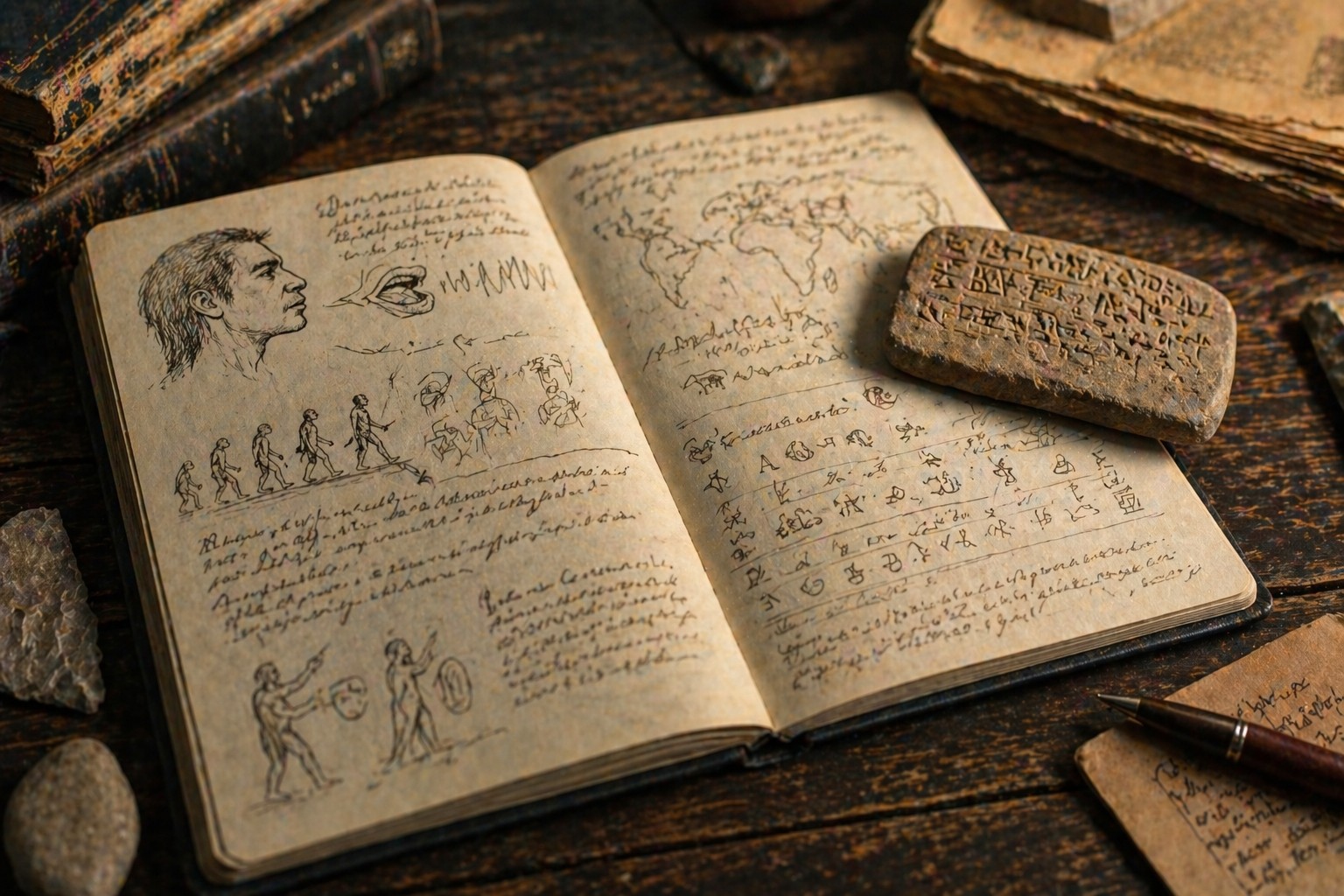
Gesture and Sound Theories Many researchers believe that the first attempts to communicate were through gestures. Eventually, sounds were added to gestures to enhance communication. Over time, these sounds evolved into the complex languages that we use today.
Necessity is the Mother of Invention It is likely that the first words ever spoken were derived out of necessity. In order to communicate with each other, early humans had to find a way to tell each other when to hunt, where to find food and how to warn each other of danger.
Social Interaction As humans started to live in groups, communication evolved into a more complex system. The first words were probably words that sounded like what they were describing (onomatopoeic). Over time, the words evolved into more abstract concepts. From gesture to sound was one of the most significant steps in the evolution of language.

3. What Was the First Word Ever Spoken?
Linguists and historians have many different theories about what the first word ever spoken was, but no one really knows. However, most researchers agree that it was probably a simple sound that communicated a simple idea. Here are a few different theories:
The "Bow-Wow" Theory This theory proposes that the first words ever spoken were imitations of the sounds around us. For example, early humans may have imitated the sound of an animal crying or the sound of running water to communicate those sounds.
The "Ding-Dong" Theory Another theory is that the first words were derived from the sounds of how objects resonated when they were struck. Many researchers believe that the first word ever spoken was probably a simple sound that communicated a simple message. It is likely that early humans used a combination of gestures and sounds to communicate until eventually the sounds evolved into complex languages. Although we do not know what the first word ever spoken was, it is fun to speculate and explore the many different theories surrounding this mystery. There is no denying that language is a powerful tool that allows us to communicate complex ideas and simple messages alike. Regardless of what the first word ever spoken was, we should all appreciate the incredible journey that has brought language to where it is today.
Theories of Language Development: One of the most commonly-accepted theories regarding the development of language is that of the Bow-Wow, Ding-Dong and Pooh-Pooh Theories. The “Bow-Wow” theory, posits that humans developed words by imitating the sounds they heard around them. For example, humans used the sound of an animal to represent that animal. The “Ding-Dong” theory supposes that humans assigned words to objects based on their inherent qualities. For example, a round, metallic object may have been associated with the word for the sound of a bell ringing. Finally, the “Pooh-Pooh” theory asserts that humans began associating words with meaningful sounds based on interjections such as grunts, sighs and expressions of surprise or excitement. All of these theories point to the idea that the first word was likely an expression of emotion or need.
Example: How Language Evolution Affects Translation Imagine you are a company that is hired to translate a series of historical documents from an ancient civilization. The language is difficult to interpret because the words are so old that they do not seem to be related to any other language. In this case, it is important to have some understanding of how language has evolved in order to complete an accurate translation. By looking at the first word used in the culture, you may be able to understand not only the origins of their language but also get a glimpse of their values, technology and interactions. If you are a translator and are frequently asked to translate ancient languages or technical dialects, it is important to understand the historical context of those languages in order to complete an accurate translation. This is where The Spanish Group comes in. With expert knowledge in over 90 languages, we are able to help you accurately translate your documents while avoiding common errors that can occur if you do not understand the history and roots of a language.
How the First Word Impacts Global Communication The importance of understanding what the first word was is not just intriguing but also educational. Though linguists may never truly determine what the first word was, studying the different theories regarding language origins can help you appreciate how language has evolved over thousands of years. From a series of grunts and moans to a complex system of communication, language has played a critical role in the development of human society. For individuals working in global business, translation and cultural communication, it is important to have some understanding of how language has evolved in order to provide context to the way we communicate today. Whether you are translating an ancient text, negotiating a cross-cultural business deal or educating the next generation of linguists, having some understanding of the origins of language can help deepen your understanding of communication in the modern world.
Key takeaways
-
-
- The first word remains a mystery but likely consisted of an expression of emotion or need.
- Language likely originated as a series of gestures and sounds.
- The first word likely derived from one of the three primary language origin theories.
- Understanding language evolution is important for translation, cultural communication and global business.
-