




























What Is the Oldest Language in the World?
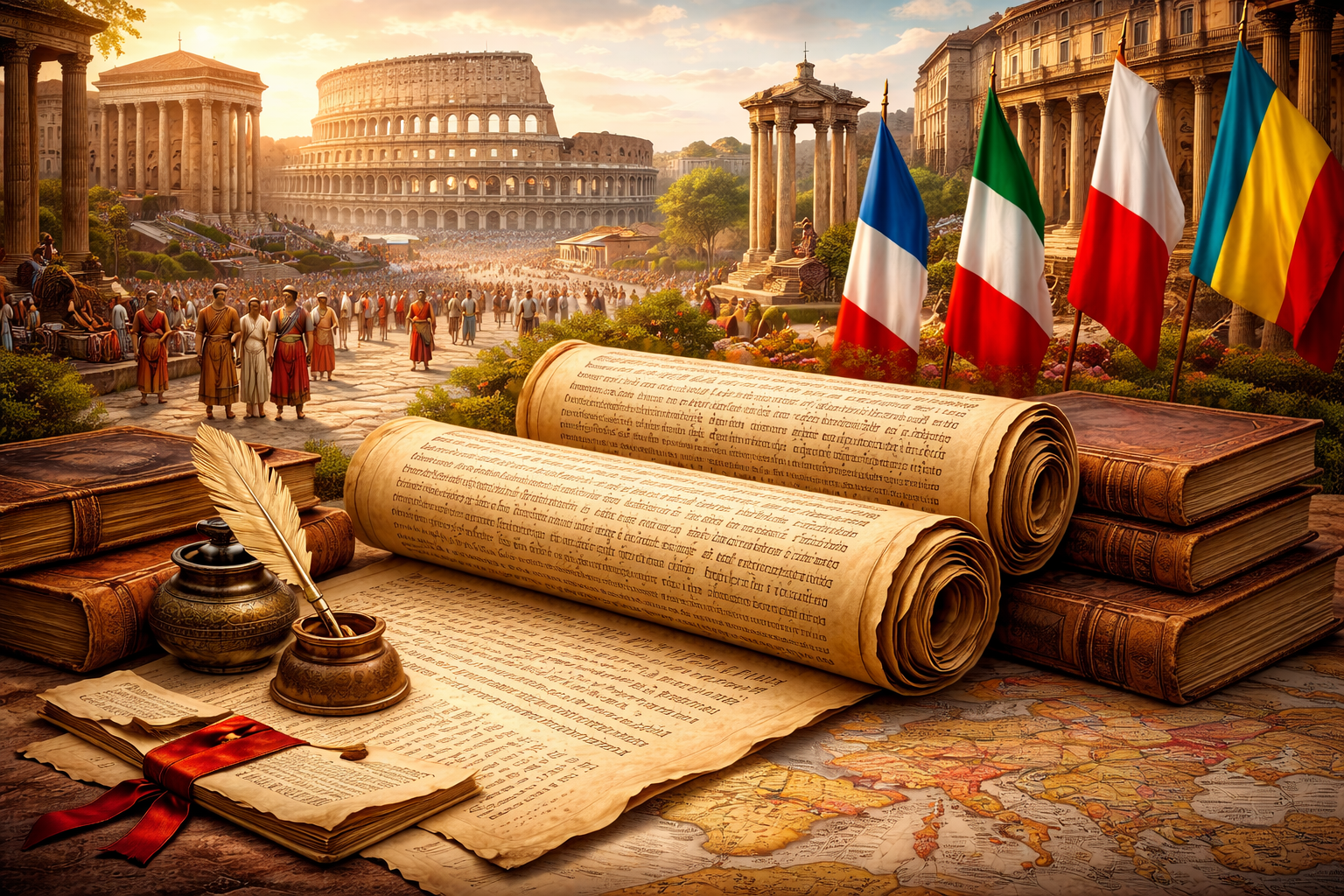
Table of Contents
- Summary
- 1. The Challenge of Finding the "First" Language
- 2. What Does "Oldest Language" Really Mean?
- 3. The Oldest Written Languages
- 4. Sanskrit vs. Tamil: Why the Debate Continues
- 5. Other Ancient Languages That Shaped Civilization
- 6. Why Some Languages Survive, and Others Disappear
- 7. How Languages Change Over Time
- 8. Translation: Connecting Ancient and Modern Worlds
- 9. The Cultural Power of Language
- 10. So, What Is the Oldest Language in the World?
- 11. A Living Connection to the Past
- FAQs
Summary
What was the oldest language on Earth? It sounds like a question with a straightforward answer, but linguists cannot identify one language as the definite first language ever spoken.
Human beings were speaking long before they developed writing systems. Since spoken words disappear unless they are recorded or passed down through a continuous tradition, there is no reliable way to reconstruct the very first language used by our ancestors.
Written evidence gives us a different perspective. Languages such as Sumerian, Egyptian, Akkadian, Sanskrit, Greek, Chinese, Hebrew, and Tamil have extremely long histories documented in inscriptions, manuscripts, religious texts, literature, and other records.
The answer also depends on what we mean by "oldest." Are we asking about the earliest language ever written down? The oldest language that still has descendants today? Or the oldest language that continues to be spoken?
Tamil is frequently described as one of the world's oldest living languages because of its ancient literary tradition and continued use. Greek also has a documented history extending back more than three millennia, while Chinese has written records dating to the second millennium BCE. Sanskrit has an exceptionally old literary and religious tradition.
So, there is no universally accepted world most oldest language. Instead, several languages have strong claims depending on the criteria used.
The Challenge of Finding the "First" Language
Let's begin with the most difficult question:
What was the first language ever spoken by humans?
The honest answer is that we do not know.
Speech almost certainly existed for thousands of years before humans began recording language in writing. Early communities could communicate through spoken sounds, gestures, expressions, and increasingly complex forms of speech without leaving behind a written record.
Writing emerged much later.
Some of the earliest known writing systems appeared in ancient Mesopotamia and Egypt during the late fourth and early third millennia BCE. The surviving records give researchers valuable information about languages used by ancient civilizations, but they do not tell us what humans were speaking before writing existed. Imagine someone trying to identify the first song ever sung by humanity. Unless someone had recorded it, there would be no way to know exactly what it sounded like.
Language presents a similar problem. The earliest spoken languages left no direct recordings. As a result, researchers study the oldest evidence that can actually be examined, including:
- Ancient inscriptions
- Clay tablets
- Religious texts
- Manuscripts
- Inscriptions on monuments
- Early grammatical works
- Comparative linguistic evidence
- Modern languages with long documented histories
This is why asking for the oldest language in the world requires a little more explanation than simply naming one language.
What Does "Oldest Language" Really Mean?
The word "oldest" can mean several different things when discussing languages.
The Oldest Recorded Language
This refers to a language for which we have very early written evidence. Sumerian is one of the strongest examples. Written Sumerian appears in cuneiform records from ancient Mesopotamia dating to the late fourth millennium BCE. Ancient Egyptian is another extremely early written language, with records dating back to roughly the same broad period.
The Oldest Living Language
This refers to a language that is still spoken by a community today and has a very long documented history. Tamil is often included in this category because it has an ancient literary tradition and remains a major living language.
Greek is another important example. Written evidence for Greek goes back to the Mycenaean period, making its documented history exceptionally long.
The Oldest Classical Language
Some languages have ancient literary or religious traditions even if their historical forms are no longer commonly used as everyday speech.
Sanskrit is a particularly important example. Its earliest form is represented by the Vedic language preserved in the Vedas, among the oldest surviving bodies of Indo-European literature.
The Oldest Language Family
This is a different question altogether.
A language family consists of languages that developed from a common ancestral language. For example, Spanish, French, Italian, Portuguese, and Romanian belong to the Romance branch of the Indo-European language family. The ancestral language itself may have existed before any written evidence survives. Understanding these distinctions makes the question much easier to answer accurately.
The Oldest Written Languages
Before comparing modern languages, it helps to look at some of the oldest languages known through writing.
Sumerian
Sumerian is one of humanity's earliest documented languages. It was written using cuneiform in ancient Mesopotamia, particularly in southern Mesopotamia, and appears in administrative records, religious texts, literature, and other documents. One of the most famous works associated with the ancient Mesopotamian literary tradition is the Epic of Gilgamesh.
Sumerian eventually ceased to function as an everyday spoken language, although it continued to be studied and used in scholarly and religious contexts for centuries.
Ancient Egyptian
Ancient Egyptian also has an extremely long written history.
It was recorded using several writing systems and stages, including hieroglyphic writing. Egyptian inscriptions appear on temples, monuments, tombs, papyri, and other materials. Over thousands of years, the language changed significantly. Coptic represents the final major stage of the Egyptian language and is still used in religious contexts within the Coptic Christian tradition.
Akkadian
Akkadian was another major language of ancient Mesopotamia.
It was written in cuneiform and includes wide historical varieties such as Babylonian and Assyrian. Akkadian became an important language of administration and international communication in the ancient Near East. These languages demonstrate an important point: the oldest languages we can study are not necessarily the oldest languages humans ever spoke. They are simply among the oldest for which substantial evidence survives.
Sanskrit vs. Tamil: Why the Debate Continues
One of the most common discussions surrounding ancient living languages involves Sanskrit and Tamil. Both have extraordinarily old histories, but they represent different kinds of linguistic continuity.
Sanskrit: An Ancient Language of Literature and Learning
Sanskrit has an exceptionally important place in the history of South Asia.
The earliest form of Sanskrit represented in the Vedic tradition is preserved in texts such as the Rigveda. These compositions were transmitted orally for generations before being recorded in manuscripts.
Sanskrit became a major language of literature, philosophy, religion, mathematics, science, and scholarship. It also influenced the development and vocabulary of many languages of South Asia.
However, modern Sanskrit is not generally spoken as an everyday first language by a large population. It remains important in religious, educational, scholarly, and ceremonial contexts and has experienced efforts at revitalization.
This distinction is important. Calling Sanskrit ancient does not necessarily mean that modern everyday speech is unchanged from the language used thousands of years ago. Like every language, Sanskrit has its own historical stages.
Tamil: An Ancient and Living Language
Tamil has one of the world's longest and richest literary traditions.
Early Tamil inscriptions and literature provide evidence of a language with a deep history in southern India and Sri Lanka. The Tolkāppiyam, an early Tamil grammatical and literary work, is traditionally regarded as an ancient text, although its exact date and composition history remain subjects of scholarly discussion.
Tamil is particularly significant in conversations about the oldest language on Earth because it is not merely an ancient literary language. It is still widely spoken today.
Tamil is used in homes, schools, universities, media, literature, cinema, government, business, and online communication. It is an official language in several countries and has millions of speakers worldwide.
Modern Tamil is naturally different from ancient Tamil. Languages evolve through changes in vocabulary, pronunciation, grammar, and usage. Nevertheless, the continuity of Tamil literary and spoken traditions is one reason it is frequently identified as one of the world's oldest living languages.
Other Ancient Languages That Shaped Civilization
Tamil and Sanskrit are not the only languages with extraordinarily long histories. Several other languages have played major roles in human civilization.
Greek: A Language With Thousands of Years of History
Greek has one of the longest documented histories of any living language. The earliest written Greek appears in the Linear B tablets associated with the Mycenaean civilization, dating to the second millennium BCE.
Later forms of Greek became central to philosophy, science, mathematics, drama, literature, and political thought. The works associated with philosophers such as Plato and Aristotle were written in Greek, as were many influential texts from the Hellenistic and Byzantine periods. Modern Greek is not identical to Ancient Greek. Thousands of years of linguistic change have shaped its vocabulary, pronunciation, grammar, and everyday usage.
However, the historical connection remains remarkable.

Chinese: One of the World's Longest Written Traditions
Chinese also has an extraordinarily long written history. Some of the earliest substantial examples of Chinese writing are oracle-bone inscriptions from the Shang dynasty, dating to the second millennium BCE.
Over time, Chinese developed through numerous historical forms. Classical Chinese became an important written language across East Asia, while spoken varieties developed in different regions.
Modern Mandarin is the most widely spoken variety of Chinese and has hundreds of millions of speakers. This makes Chinese a fascinating example of how a written tradition can continue for thousands of years while the spoken language changes significantly over time.
Hebrew: An Ancient Language With a Modern Revival
Hebrew has a particularly unusual history.
Ancient Hebrew was used in the Hebrew Bible and other historical and religious texts. For many centuries, it remained primarily associated with religious, scholarly, and literary use rather than everyday community speech.
During the late nineteenth and early twentieth centuries, Hebrew underwent a remarkable revival as a modern spoken language. Modern Hebrew is now widely spoken in Israel. Its history demonstrates that languages do not always follow a simple path from "alive" to "dead." Under certain historical and social circumstances, a language can return to widespread everyday use.
Arabic: Ancient Literary Tradition and Modern Use
Arabic has a long literary history and remains a major world language today.
The Arabic of the Quran has enormous religious significance, while Classical and Modern Standard Arabic have played important roles in literature, education, media, and formal communication.
At the same time, Arabic-speaking communities use numerous regional varieties in everyday conversation. Arabic therefore provides another example of the difference between a classical literary language and the many spoken forms that develop across time and geography.
Latin: A Language That Changed the World
Latin was central to the Roman world and later became a major language of European religion, scholarship, law, and education. Although Classical Latin is no longer a community's ordinary first language, its influence remains enormous.
Spanish, French, Italian, Portuguese, and Romanian developed from varieties of spoken Latin. English also contains thousands of words derived directly or indirectly from Latin, especially in fields such as law, medicine, science, and academia. Latin shows that a language does not have to remain a daily spoken language to have an enormous influence on the modern world.
Egyptian and Coptic
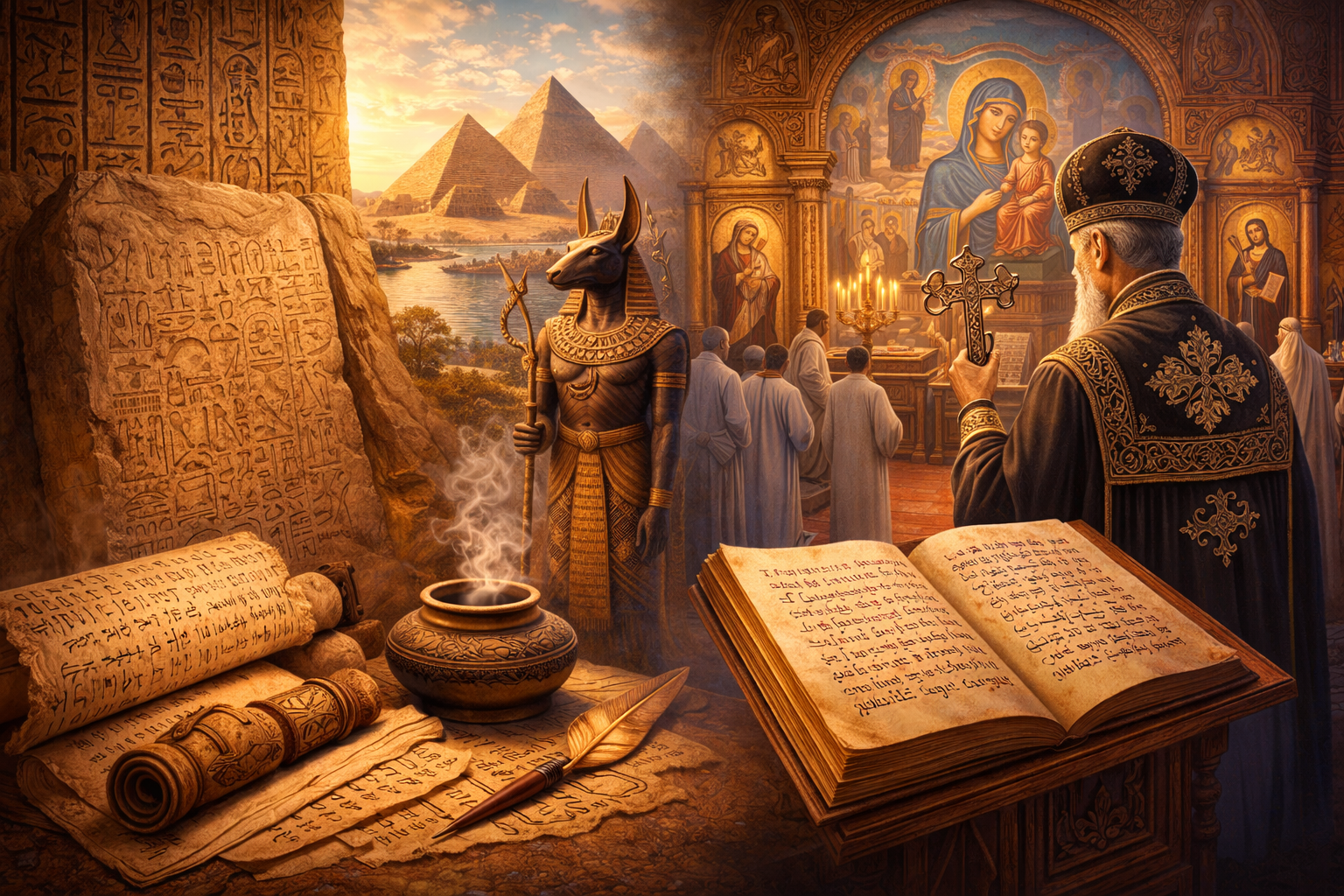
Ancient Egyptian developed through several historical stages over thousands of years.
The final major stage is known as Coptic. Although Coptic is not widely used as an everyday spoken language today, it continues to have religious importance, particularly in the Coptic Orthodox Church. Its survival provides a fascinating linguistic connection to ancient Egypt.
Why Some Languages Survive, and Others Disappear
Languages are constantly changing. Some grow and spread. Others become restricted to smaller communities. Some eventually disappear as everyday spoken languages. There is rarely one simple reason.
Factors that can contribute to language decline include:
- Migration: Communities may move and adopt the dominant language of a new region.
- Political change: Governments may promote one language for administration or education.
- Colonization: Colonial languages can replace or marginalize Indigenous languages.
- Education: Children may be educated primarily in a language different from the one spoken by older generations.
- Economic opportunity: People may adopt a dominant language because it provides access to jobs or education.
- Cultural assimilation: Smaller communities may gradually shift toward a larger linguistic group.
- Globalization: International communication can increase the use of widely spoken languages.
When children stop learning a language from their parents, the language can become endangered. This is why language preservation matters.
A disappearing language can mean the loss of traditional stories, ecological knowledge, songs, historical memories, and cultural expressions that may not have direct equivalents in another language.
How Languages Change Over Time
One reason it is difficult to name the oldest language in the world is that languages are never completely static.
Consider English. The English spoken today is very different from the English used hundreds of years ago. Middle English itself developed from earlier forms influenced by Old English, Norse, French, Latin, and other languages.
The same process has happened everywhere.
Tamil has changed.
Greek has changed.
Chinese has changed.
Arabic has changed.
Sanskrit itself has historical stages.
Even when a language has an ancient written record, that does not mean modern speakers are using exactly the same language their ancestors used thousands of years ago. Instead, language should be viewed as a continuous process of change.Pronunciation shifts. New words appear. Old words disappear. Grammar develops. Communities borrow words from their neighbors.
In this sense, linguistic continuity does not mean remaining unchanged.It means that a language tradition continues across generations while evolving along the way.
Translation: Connecting Ancient and Modern Worlds
Language connects people, but differences between languages can also create communication barriers.
Translation helps bridge those gaps.Historical and ancient texts present particularly difficult translation challenges. A translator may need to understand not only vocabulary and grammar but also the historical period, cultural references, religious concepts, idioms, and writing conventions associated with the original text.
Modern translation has its own challenges.
Legal agreements, medical records, immigration documents, financial materials, technical manuals, and business communications require precision because even a small error can change the intended meaning. Professional translation services can help organizations and individuals communicate across linguistic and cultural boundaries. Translation can also help preserve cultural heritage by making historical works accessible to readers who cannot understand the original language.
In this sense, translation creates a bridge between different points in history as well as between different communities today.
The Cultural Power of Language
Language is much more than a collection of words.
It carries memories, traditions, humor, values, stories, and identity. A language can tell us how communities describe family relationships, nature, food, emotions, social roles, and important events.
Consider how ancient languages have influenced modern vocabulary.
- Latin has influenced European languages and scientific terminology.
- Greek contributes extensively to medical, scientific, and philosophical vocabulary.
- Sanskrit has influenced the vocabulary of numerous South Asian languages.
- Arabic has contributed words to mathematics, astronomy, science, food, and everyday vocabulary in many languages.
- Chinese has had an enormous influence on the languages and writing traditions of East Asia.
These connections demonstrate that languages do not exist in isolation.
They interact. People migrate, trade, conquer, intermarry, study, travel, and communicate. As they do, languages borrow from one another.
That is one reason the history of language is also a history of humanity.
So, What Is the Oldest Language in the World?
So, after all this, can we answer the question?
What is the oldest language in the world?
There is no single universally accepted answer.
If the question refers to some of the oldest written languages, Sumerian and ancient Egyptian are among the strongest candidates because they have extremely early written records. If the question refers to a living language with a very ancient literary and spoken tradition, Tamil is frequently cited as one of the strongest examples.
Greek also has a documented history stretching back more than three thousand years.
Chinese has one of the world's longest continuous written traditions.
Sanskrit has an exceptionally ancient literary and religious history.
Hebrew demonstrates how an ancient language can be revived as a modern spoken language.
Arabic combines a long classical literary tradition with widespread modern use.
So rather than asking which language "wins," it is more accurate to ask:
Oldest according to which measure?
That small change in the question produces a much more accurate understanding of linguistic history.
A Living Connection to the Past
We may never discover the first word spoken by a human being.
We may never know exactly what the earliest human languages sounded like. Those languages existed long before writing and disappeared without leaving a record that researchers can reliably reconstruct. But ancient languages have not disappeared entirely from human history. Their descendants, literary traditions, vocabulary, inscriptions, manuscripts, and cultural influences remain.
When someone speaks Tamil today, reads a Greek text, studies Sanskrit literature, communicates in Arabic, writes in Hebrew, or uses a modern Chinese variety, they are participating in linguistic traditions that stretch far back into history.
That is what searches for the oldest language on Earth so fascinating.
It is not simply a competition between languages. It is a way of understanding how human beings have communicated, preserved knowledge, created communities, and passed ideas from one generation to another.
Language changes because people change. And yet, through language, the past continues to speak to the present.