



























Transcreation vs. Translation: What They Mean and Key Differences

Table of Contents
-
- 1. Summary
- 2. What Translation Really Means
- 3. Understanding Transcreation
- 4. Key Differences Between Translation and Transcreation
- 5. How Professional Services Protect Your Brand
- 6. Conclusion
- 7. Key Takeaways
- 8. FAQs
Summary
Imagine launching a marketing campaign in multiple countries, only to find your slogans fall flat—or worse, offend the audience. Many businesses make the mistake of using standard translation when what they really need is transcreation to capture emotion, tone, and cultural nuances.
Choosing the right approach is critical for branding, marketing, and international communications. This guide explains the difference between translation and transcreation, why it matters, and how companies like The Spanish Group ensure your content resonates globally while remaining accurate and compliant.
Preserving Meaning vs. Words
What Translation Really Means
Translation is about converting words and sentences from one language to another while preserving meaning. Precision and accuracy are key. Translation is ideal for documents, legal content, websites, and instructional material.
Accuracy is critical:
- Legal contracts, manuals, and official documents require exact wording to avoid problems.
Consistency matters:
- Terms must remain the same across documents to prevent misunderstandings.
Cultural differences are secondary:
- Translation ensures clarity but may not fully capture marketing tone or emotional impact.
Example:
A software user manual must be translated precisely. Errors could confuse users or create legal liabilities. Professional translation services like The Spanish Group ensure content is accurate, compliant, and legally sound.
Understanding Transcreation
Transcreation goes beyond word-for-word translation. It adapts content to maintain tone, style, emotion, and intent for a different cultural context. This is essential for marketing campaigns, advertising, branding, and multimedia content.
The benefits of transcreation include:
- Preserving the impact of slogans and campaigns.
- Adapting humor, idioms, and cultural references for the target audience.
- Maintaining brand consistency across languages.
- Making content feel local and authentic.
Challenges include:
- Balancing creative changes with brand guidelines.
- Staying culturally aware of market trends.
- Ensuring consistent messaging across platforms.
The Spanish Group combines language expertise with marketing knowledge to provide transcreation that resonates globally without cultural missteps.
Key Differences Between Translation and Transcreation
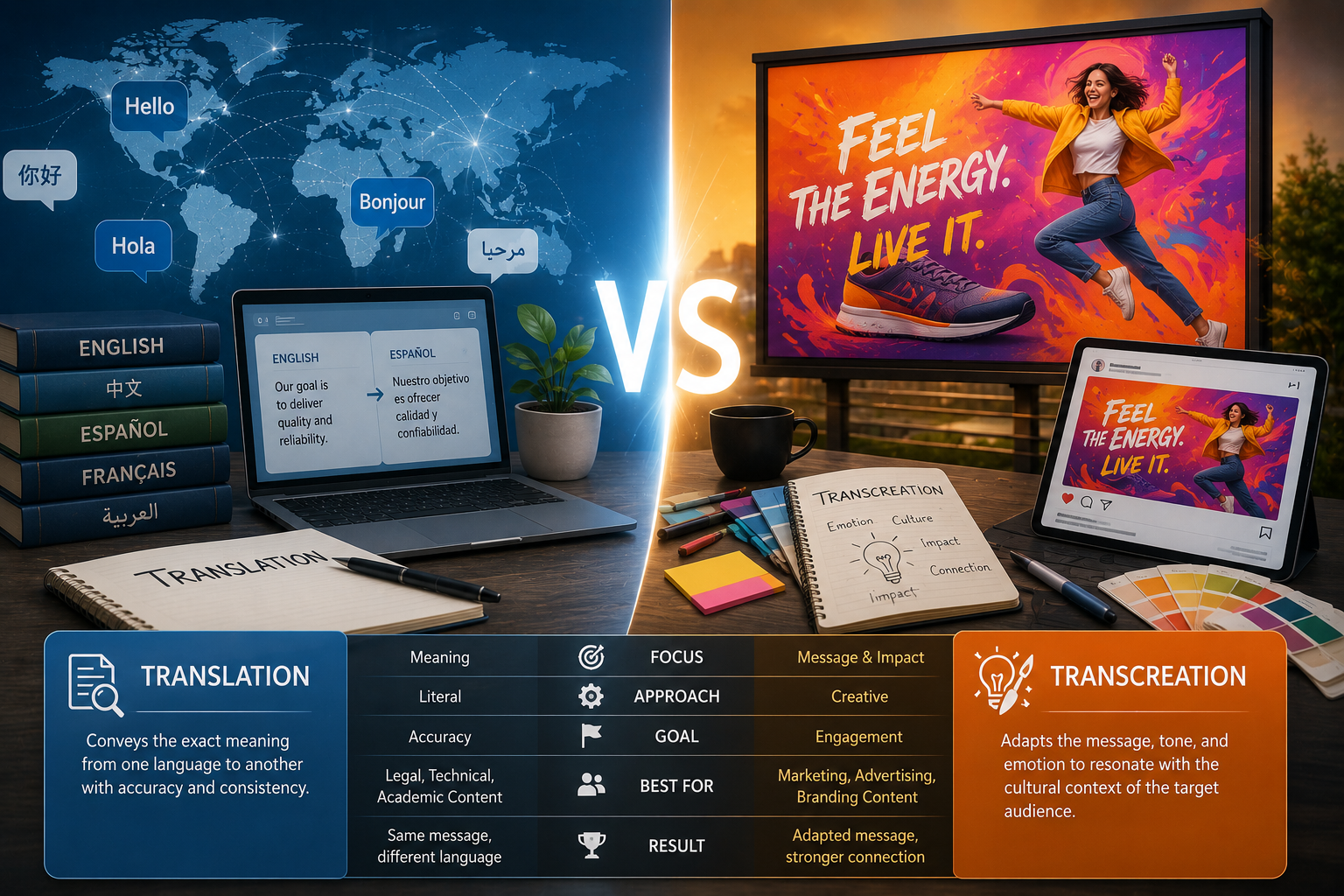
Translation focuses on conveying meaning with accuracy and consistency. It is ideal for legal, technical, and academic content, requires minimal creativity, and has a medium risk of miscommunication if done poorly.
Transcreation, on the other hand, conveys both meaning and emotion. It is used for marketing and advertising campaigns, requires significant creativity, adapts heavily to cultural nuances, and carries a high risk if done incorrectly.
Real-life implications:
- Using translation for marketing can result in campaigns that are boring, confusing, or culturally insensitive.
- Using transcreation for legal documents may lead to compliance issues or legal risks.
Potential consequences:
- Businesses risk losing revenue from ineffective campaigns.
- Brand reputation may be damaged.
- Legal or regulatory issues can arise.
Certified translation and transcreation services help ensure the right approach is used for each type of content.

How Professional Services Protect Your Brand
Expert providers help businesses ensure accuracy through precise translation of contracts, manuals, and official content. They also adapt content culturally through transcreation for marketing campaigns, websites, and social media. Professionals ensure compliance for legal, tax, healthcare, and business documents, and protect the brand by avoiding errors or cultural missteps.
Example:
A U.S. company launched a literal translation of an ad campaign. One slogan offended the target market, reducing sales. The Spanish Group applied transcreation, adapting the message culturally and linguistically. The revised campaign resonated with the audience, protected the brand, and increased engagement.
Working with experts ensures content is precise, culturally relevant, and effective—whether for marketing, websites, or compliance documents.
Conclusion
Understanding the difference between translation and transcreation is crucial for businesses. Translation ensures accuracy and compliance, while transcreation ensures emotional impact and cultural relevance. Using the wrong approach can lead to miscommunication, lost revenue, or reputational damage.
Companies like The Spanish Group provide both translation and transcreation services, helping businesses deliver clear, compelling, and culturally adapted content globally. Investing in professional services protects your brand, ensures compliance, and maximizes your global communications.
Key Takeaways
- Translation focuses on accuracy; transcreation focuses on emotion and cultural resonance.
- Choosing the wrong approach can harm brand reputation and marketing effectiveness.
- Professional services provide both precision and cultural adaptation.
- Certified translation and transcreation safeguard business communications worldwide.