



























Top 10 Mexican Traditions That Define the Country’s Rich Heritage
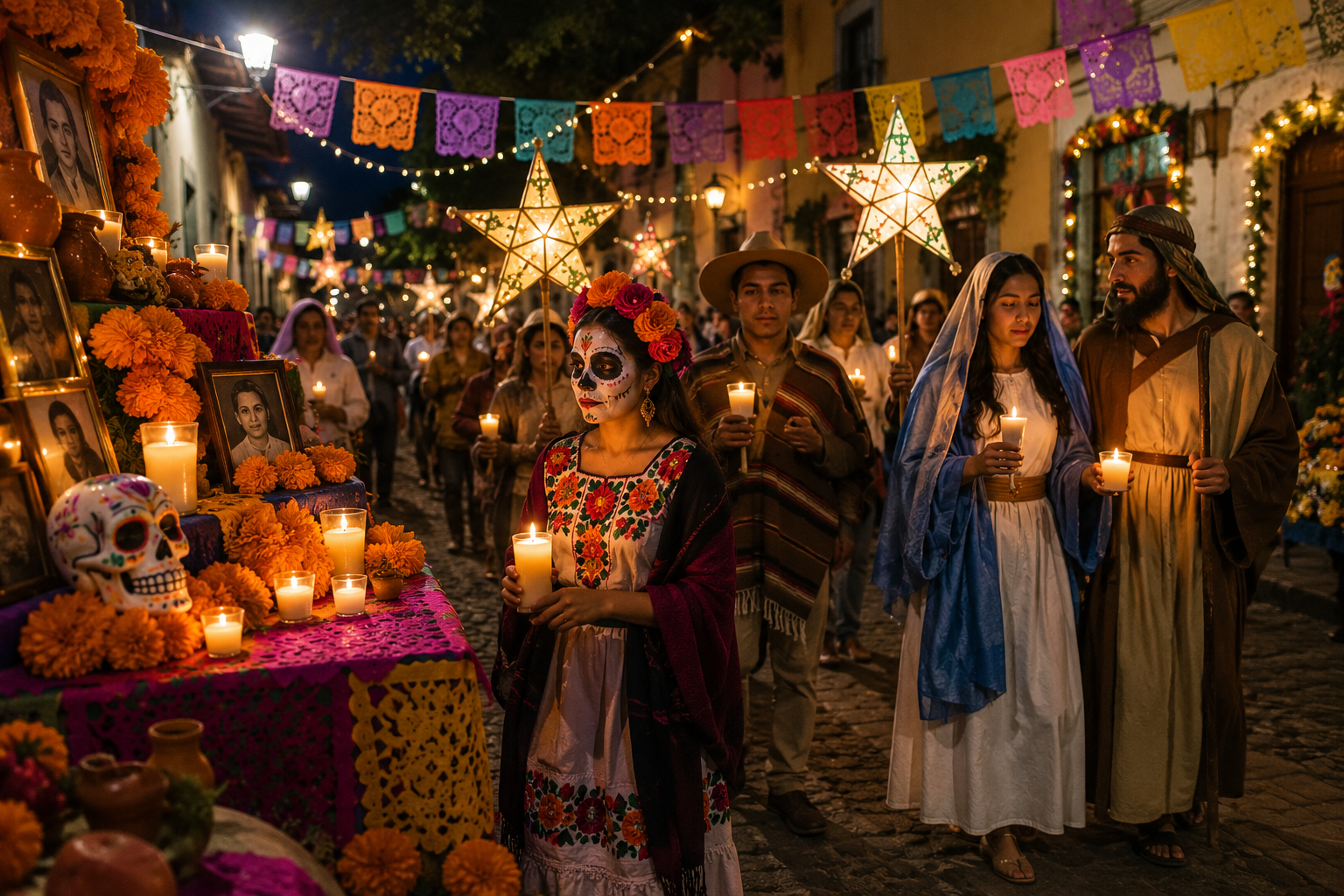
Table of Contents
Table of Contents
- Summary
- 1. Introduction: Why Mexican Traditions Matter
- 2. Día de los Muertos: Celebrating Life and Death
- 3. Las Posadas: A Christmas Tradition
- 4. Independence Day (El Grito de Dolores)
- 5. Lucha Libre: A Mexican Wrestling Tradition
- 6. La Quinceañera: The Coming of Age Celebration
- 7. Semana Santa: The Holy Week Celebrations
- 8. Mexican Cuisine: A Tradition Passed Through Generations
- 9. The Day of the Dead Altars: Ofrendas to Honor Ancestors
- 10. Mariachi Music: A Symbol of Mexican Identity
- 11. Conclusion
Summary
Mexico’s rich cultural traditions play a vital role in the nation’s identity. From the soulful celebration of Día de los Muertos to the family-centered Quinceañera, these customs connect generations, celebrate history, and shape the Mexican way of life. In this blog, we explore the top 10 Mexican traditions, their significance, and why understanding them is crucial for anyone engaging with Mexico.
Introduction: Why Mexican Traditions Are So Important
Have you ever wondered why Mexican culture is so dynamic and exciting? The food, the music, the traditions? If you're looking to do business in Mexico, move there, or are just curious about its traditions, it's essential to understand Mexican culture. These traditions define the identity of Mexico and its people.
Understanding them isn’t just about learning cultural facts; it's about respecting what makes Mexico unique and embracing the values that drive its communities. In this blog, we’ll take a deep dive into the top 10 Mexican traditions and explain why each is so significant.
Día de los Muertos: Celebrating Life and Death
Día de los Muertos is one of Mexico’s most recognized and celebrated traditions. This holiday, held annually on November 1st and 2nd, honors deceased loved ones. Rooted in both indigenous cultures and Catholicism, it’s a celebration of life and death, where families build ofrendas (altars) in their homes, featuring the deceased's favorite foods, marigolds, photos, and candles. It’s a joyful time, not a somber one, as families believe that the spirits of the dead return to visit them.
Key Points:
- Ofrenda: Altars set up in homes and cemeteries.
- Sugar Skulls: Symbolize the spirit of the departed.
- Papel Picado: Colorful paper decorations adorning the altars.
This tradition reminds Mexicans that death is part of the ongoing cycle of life, and it’s celebrated with joy, remembrance, and colorful rituals.
Las Posadas: A Christmas Tradition
Las Posadas, celebrated from December 16th to December 24th, is a cherished Mexican Christmas tradition. It involves reenacting Mary and Joseph’s search for shelter before the birth of Jesus. Communities walk door-to-door, singing carols, asking for shelter, and receiving a warm welcome. This dramatic tradition culminates in a large feast, with tamales, ponche, and sweets to share.
Key Points:
- The Posada: A reenactment of Mary and Joseph’s journey.
- Food & Treats: Tamales, ponche, and sweets are shared.
- Community Celebration: Brings people together to celebrate the season.
Las Posadas is all about community and hospitality, emphasizing the importance of unity during the Christmas season.
Independence Day (El Grito de Dolores)
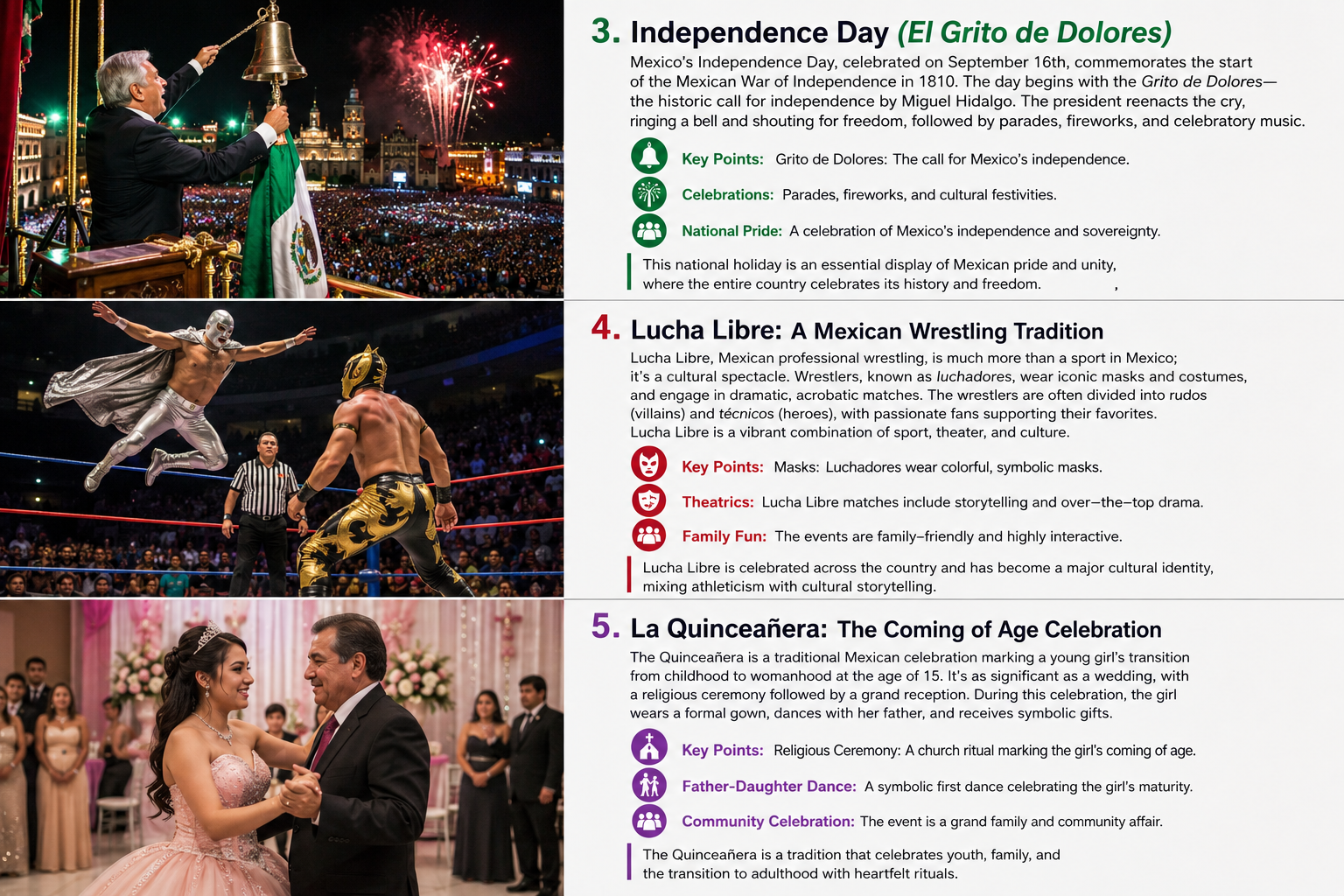
Mexico’s Independence Day, celebrated on September 16th, commemorates the start of the Mexican War of Independence in 1810. The day begins with the Grito de Dolores—the historic call for independence by Miguel Hidalgo. The president reenacts the cry, ringing a bell and shouting for freedom, followed by parades, fireworks, and celebratory music.
Key Points:
- Grito de Dolores: The call for Mexico’s independence.
- Celebrations: Parades, fireworks, and cultural festivities.
- National Pride: A celebration of Mexico’s independence and sovereignty.
This national holiday is an essential display of Mexican pride and unity, where the entire country celebrates its history and freedom.
Lucha Libre: A Mexican Wrestling Tradition
Lucha Libre, Mexican professional wrestling, is much more than a sport in Mexico; it’s a cultural spectacle. Wrestlers, known as luchadores, wear iconic masks and costumes, and engage in dramatic, acrobatic matches. The wrestlers are often divided into rudos (villains) and técnicos (heroes), with passionate fans supporting their favorites. Lucha Libre is a vibrant combination of sport, theater, and culture.
Key Points:
- Masks: Luchadores wear colorful, symbolic masks.
- Theatrics: Lucha Libre matches include storytelling and over-the-top drama.
- Family Fun: The events are family-friendly and highly interactive.
Lucha Libre is celebrated across the country and has become a major cultural identity, mixing athleticism with cultural storytelling.
La Quinceañera: The Coming of Age Celebration
The Quinceañera is a traditional Mexican celebration marking a young girl’s transition from childhood to womanhood at the age of 15. It’s as significant as a wedding, with a religious ceremony followed by a grand reception. During this celebration, the girl wears a formal gown, dances with her father, and receives symbolic gifts.
Key Points:
- Religious Ceremony: A church ritual marking the girl's coming of age.
- Father-Daughter Dance: A symbolic first dance celebrating the girl's maturity.
- Community Celebration: The event is a grand family and community affair.
The Quinceañera is a tradition that celebrates youth, family, and the transition to adulthood with heartfelt rituals.
Conclusion
Mexican traditions like Día de los Muertos, Las Posadas, and the Quinceañera are deeply ingrained in the fabric of Mexican society. These traditions not only reflect Mexico's history and identity but also bind communities together in meaningful ways. Whether you're doing business in Mexico, connecting with Mexican communities, or simply visiting, respecting and understanding these traditions will help you build stronger, more meaningful relationships.
At The Spanish Group, we understand the importance of cultural sensitivity. Our certified translation services ensure that your communications are accurate, culturally appropriate, and aligned with Mexican traditions. Whether it’s legal documents, marketing materials, or personal communications, we’re here to help you navigate cultural differences effectively.
Key Takeaways
- Día de los Muertos celebrates life and death with vibrant, meaningful traditions.
- Las Posadas unites communities in celebration of the Christmas story.
- Lucha Libre represents Mexican pride through wrestling, entertainment, and family values.
- The Quinceañera celebrates the transition to womanhood with a grand, family-oriented event.