



























Japanese vs Chinese Writing: Which Is More Complex?

Table of Contents
-
- 1.Introduction: Chinese vs Japanese Writing – What’s the Real Difference?
- 2. How the Characters Differ: Understanding Kanji and Hanzi
- 3. Grammar and Syntax: How Sentence Structures Compare
- 4. Cultural Significance: The Role of Writing in Japanese and Chinese Culture
- 5. Real-World Scenario: Translation Gone Wrong – The Importance of Getting It Right
- 6. Conclusion: What You Need to Know About Japanese vs Chinese Writing
- 6. Key Takeaways
- 7. FAQs
Summary
If you do not speak or read Chinese or Japanese, the two sets of characters can be very confusing and you may even think that they are the same. But the reality is, the Chinese and Japanese writing systems are very different and have some major differences. In this blog, we will look at the differences between Chinese and Japanese writing. Which one is more complicated? How do you learn Chinese and Japanese characters? How to translate Chinese and Japanese? The answers to these questions will be explained in detail below.
1. Chinese Writing System vs Japanese Writing System: What’s the difference?
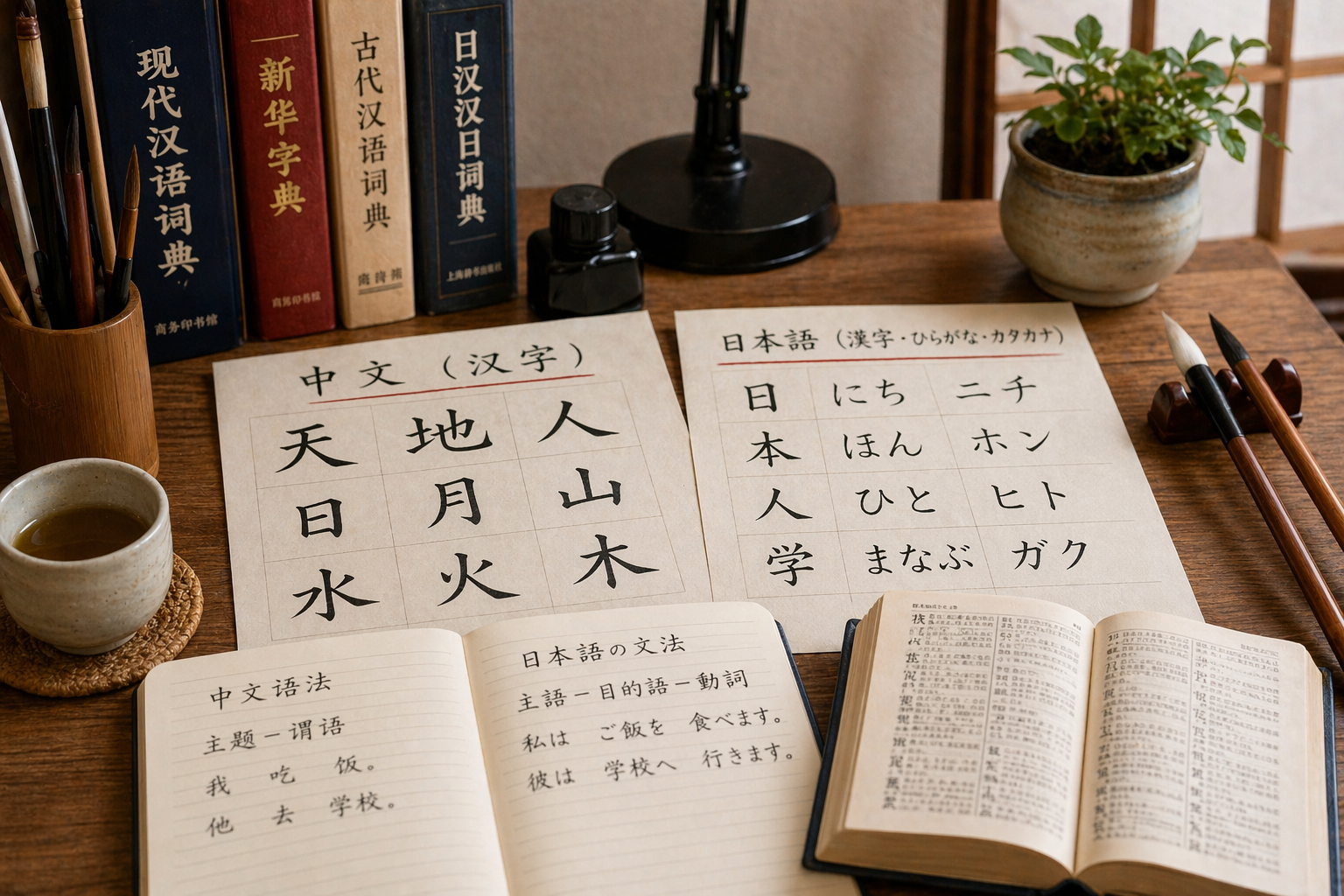
Chinese and Japanese writing systems have a long history. Although they look similar, there are a lot of differences between Chinese and Japanese writing. The most apparent similarity between Chinese and Japanese writing systems is that they both use Chinese characters (Hanzi characters in Chinese and Kanji characters in Japanese). But, the Chinese character usage in the Chinese and Japanese writing systems are very different.
Chinese writing system: Chinese uses characters for almost everything, including nouns, verbs, and adjectives. Chinese is a monosyllabic language. Each Chinese character represents one syllable and each Chinese character represents one word or a morpheme.
Japanese writing system: Japanese writing system is more complicated. The Japanese writing system combines Kanji with two types of syllabary scripts: Hiragana and Katakana. For a translator, it is essential to be aware of the differences between Chinese and Japanese writing systems to provide quality translation services.
2. What is the difference between Chinese Kanji and Japanese Kanji?
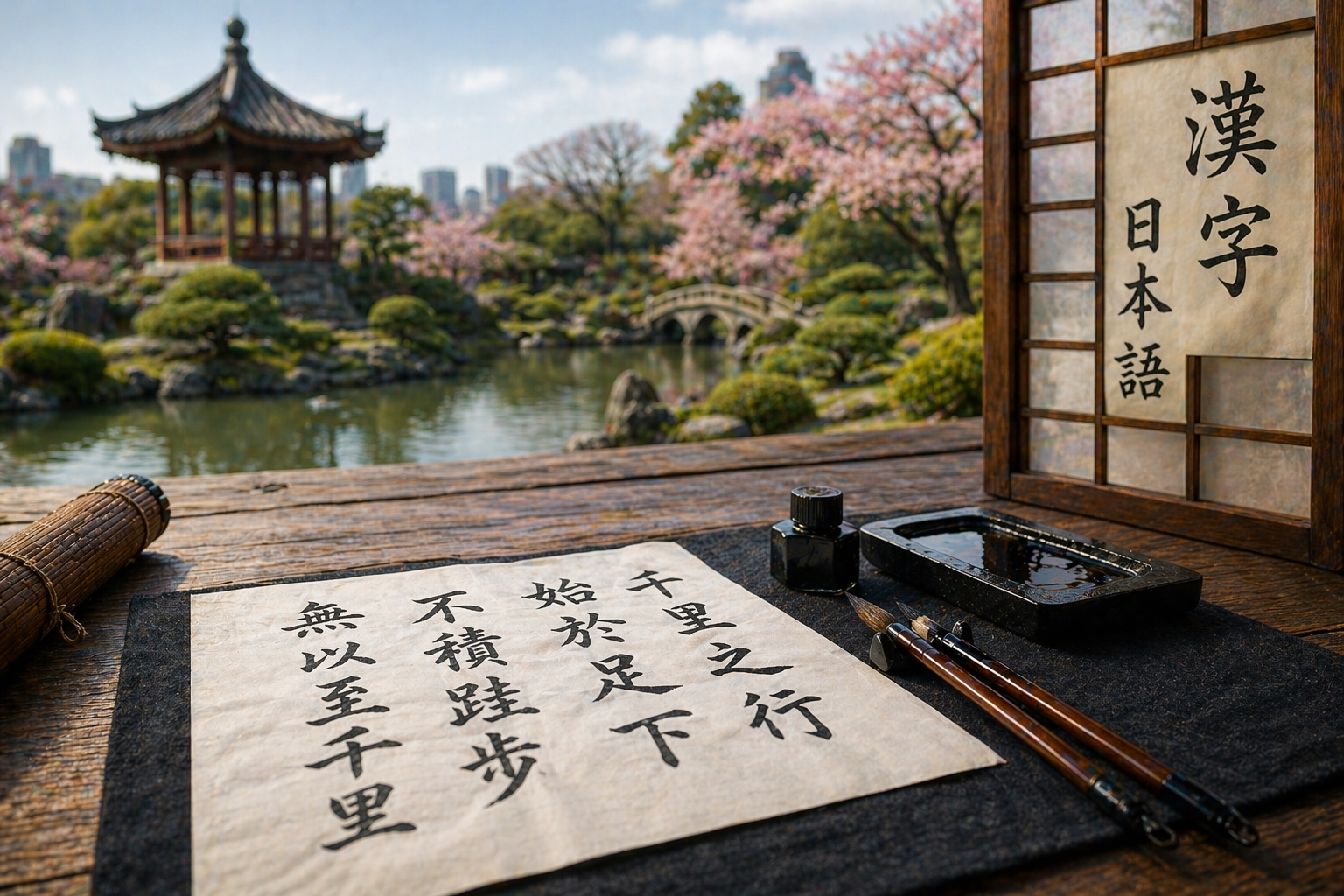
The most direct connection between Chinese and Japanese writing systems is the Chinese characters (Hanzi in Chinese, Kanji in Japanese). Kanji in Japanese is originated from China. Throughout history, Japan has adopted Kanji into the Japanese language to fit its phonology and grammar. Here are the main differences between Chinese Kanji and Japanese Kanji:
Evolution: Although Kanji and Hanzi share many common characters, the meanings and pronunciations of many characters have changed over time. Japanese Kanji characters have more variations of meanings and pronunciations compared with Chinese Hanzi characters. Chinese Hanzi characters tend to have more standardized meanings and pronunciations across different regions.
Pronunciation: For both Chinese and Japanese writing systems, pronunciation is very important. In Chinese, each character has only one pronunciation (not counting tones). In Japanese Kanji characters have multiple readings depending on the context.
Simplified and Traditional characters: There are two types of Chinese writing: Simplified Chinese (mainly used in Mainland China) and Traditional Chinese (mainly used in Taiwan, Hong Kong). Japan, however, uses a standardized version of Kanji, with some characters simplified but not to the same extent as Simplified Chinese.
As a business owner looking to expand into the Chinese or Japanese markets, it is very important to understand the differences between Chinese Kanji and Japanese Kanji characters. There is nothing worse than having the wrong Kanji characters on your brand logo or your marketing material.
3.Chinese Writing System vs Japanese Writing System: Grammar and Syntax
As we discussed before, both Chinese and Japanese writing systems are completely different. So are Chinese grammar and Japanese grammar. Although both Chinese and Japanese grammar are context and word order dependent, Chinese and Japanese grammar rules are very different:
Chinese grammar: Chinese grammar is called topic-prominent language. In a Chinese sentence, the subject is always placed before the predicate. Although Chinese grammar is relatively simple compared with Japanese grammar, Chinese grammar can also be very complicated as the meaning of a sentence is highly dependent on the context and tones.
Japanese grammar: Japanese, on the other hand, follows a "subject-object-verb" (SOV) order. This means that the verb typically comes at the end of the sentence, which can cause confusion for those accustomed to subject-verb-object (SVO) languages like English. Furthermore, Japanese uses particles to indicate grammatical relationships, making its structure more complex than Chinese.
Chinese writing and Japanese writing have distinct differences. Learning Chinese and Japanese writing systems can be very challenging. But with the right guidance and practice, learning these two writing systems can be very rewarding. For businesses wanting to expand into the Chinese or Japanese markets, it is essential to understand the differences between Chinese and Japanese writing systems to better communicate with your target audience. If you want to learn more about the Chinese and Japanese languages and writing systems, please follow our blogs.
Japanese Grammar
In Japanese, the grammar is subject-object-verb (SOV) so that the verb comes after the object in a sentence. This can be confusing for those who are used to speaking an SVO language like English, and the Japanese language utilizes particles to denote relationships between words, thus making Chinese grammar simpler. Understanding grammar and sentence structure is the key to properly translating any text.
4. Cultural Significance of Writing in Chinese and Japanese Cultures
Writing is an important part of both Chinese and Japanese cultures, but the role of writing is a bit different between the two cultures.
Chinese Writing
The character-based writing system is a testament to the interrelation of language and history in China, and the calligraphy is considered a form of art. Each stroke of the brush is meant to be beautiful as well as meaningful.
Japanese Writing
Writing is more functional in Japanese culture, but still considered important. Kanji is used with Hiragana and Katakana to create a written language that is more detailed and complex. Writing in Japan is also closely tied to social expectations and social norms with levels of politeness and formality in written and spoken word. As a translator, business, or otherwise, this is an important distinction to consider when translating any written text.
5. Real-Life Example of What Can Go Wrong and Why You Should Hire a Pro
Now imagine that you are a business that needs to translate your marketing material for a new campaign in China and Japan. Let's assume that you have hired a well-intentioned but slightly uninformed translator who decides to use the same written characters for both Chinese and Japanese text. You've also decided to run a marketing campaign with a play on words that could be interpreted incorrectly if you don't take cultural and linguistic differences into account. This is where a professional translation service like The Spanish Group comes in. We offer translation services in over 90 languages and can ensure that your documents are not only accurate but also culturally relevant. Our experts understand the intricacies of both Chinese and Japanese writing systems and can help you avoid costly mistakes and miscommunications.
Conclusion: The Need to Understand Mexico’s Language Diversity
Chinese vs Japanese writing systems isn't about which system is more difficult or complex, it's about understanding that Chinese and Japanese writing systems are different and present their own unique challenges. Though both Chinese and Japanese utilize characters derived from Chinese, they have different grammar and sentence structure and cultural considerations that are important to understand. Whether you are a translator or simply need a document translated, understanding these differences will help you communicate more clearly and effectively.
Key takeaways
-
-
-
-
- Chinese and Japanese writing systems are similar but different.
- Chinese characters (hanzi) are simpler in terms of pronunciation but more complex in terms of tones.
- Japanese writing systems incorporate Kanji, Hiragana, and Katakana making the writing system more complex.
- Understanding cultural considerations and grammar is critical to proper translation.
- A professional translation service like The Spanish Group can help navigate these complexities and ensure your document or website is accurately translated and culturally relevant.
-
-
-