



























How AI Technology Is Transforming Website Translation
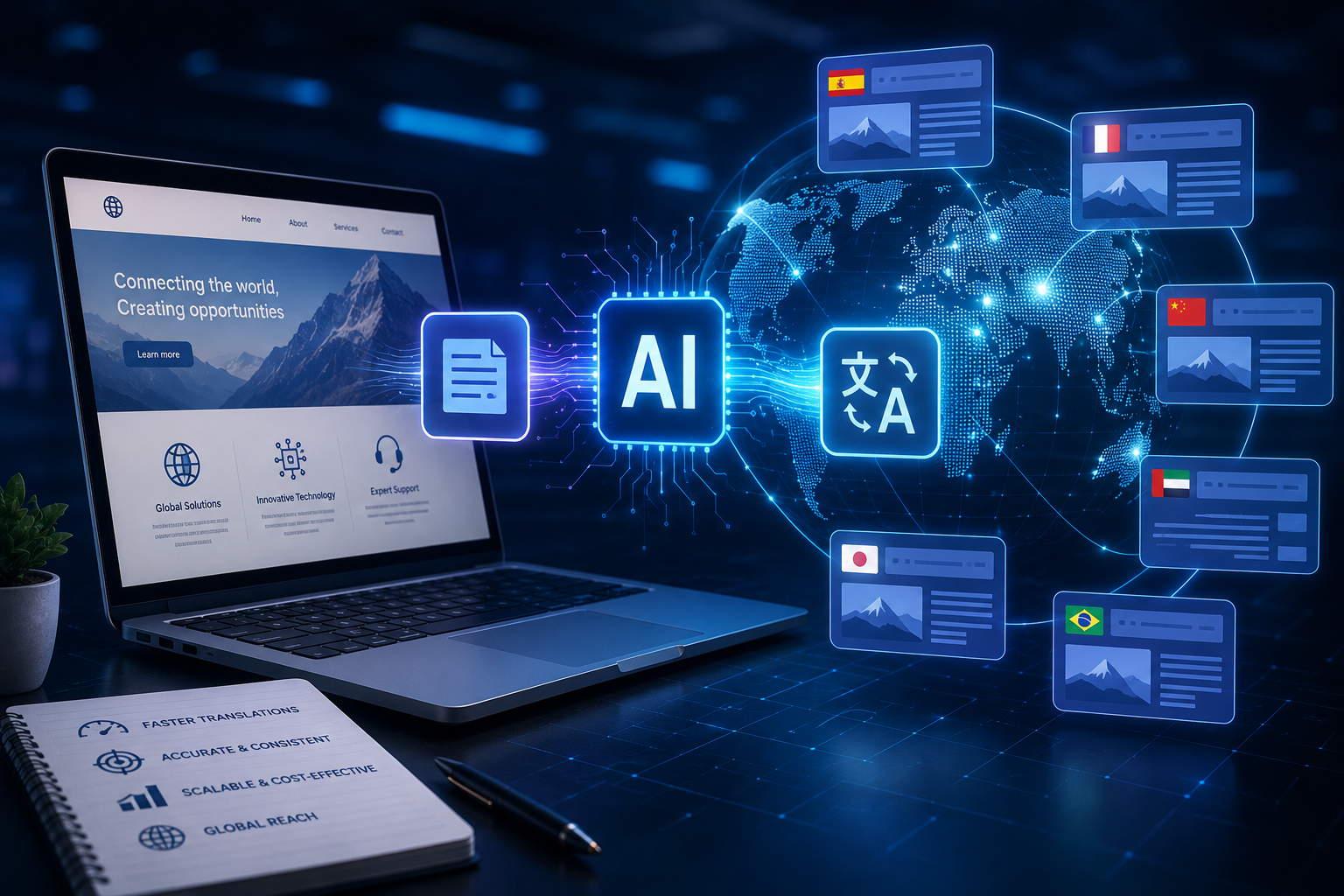
Table of Contents
-
- 1. Summary
- 2. Why Website Translation Is Changing Rapidly
- 3. How AI Is Transforming Website Translation Services
- 4. The Limits of AI in Website Translation
- 5. Real-World Scenario: When AI Translation Hurts Business Growth
- 6. Human Expertise vs AI: Finding the Right Balance
- 7. Conclusion
- 8. Key Takeaways
- 9. FAQ
Summary
Artificial intelligence is changing how companies approach global communication through faster and more scalable website translation solutions. Businesses can now launch multilingual websites in record time, but speed alone is not enough to guarantee accuracy. Human understanding is still essential for meaning, tone, and intent. This article explores how AI is reshaping translation workflows and why human expertise remains critical for quality, compliance, and brand trust.
Why Website Translation Is Changing Rapidly
The need for a strong digital presence has completely changed how companies approach language. Today, a website is often the first point of contact between a brand and its international audience. Because of this, businesses are no longer treating translation as a secondary task. Instead, website translation service solutions have become part of their core digital strategy.
This shift is driven by both user expectations and global competition. Customers expect to access content instantly in their own language, without friction or delays. As a result, companies are under pressure to scale their websites quickly across multiple regions while maintaining consistency in messaging and brand identity.
At the same time, governments and international organizations continue to emphasize the importance of accessibility in digital services. The European Commission highlights how language access is essential for inclusion and cross-border communication in digital markets.
However, as demand increases, so does complexity. A modern website is no longer just static text. It includes marketing copy, legal disclaimers, SEO content, product descriptions, and user experience flows. Each of these elements requires not just translation, but adaptation. This is where many businesses realize that automation alone cannot guarantee quality.
How AI Is Transforming Website Translation Services
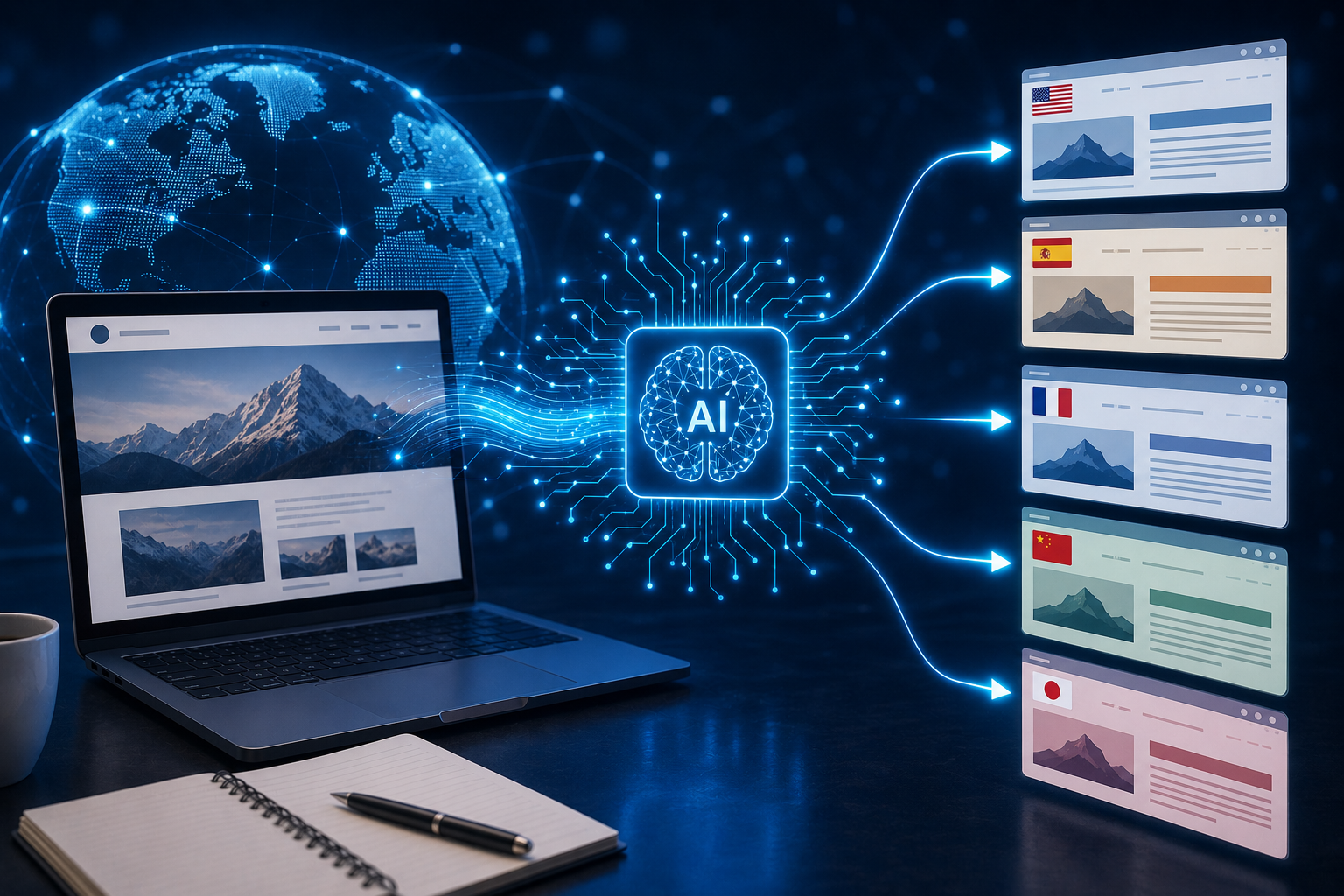
Artificial intelligence has dramatically changed the speed at which content can be translated. A modern website translation service powered by AI can now process entire websites in seconds—something that previously required days or even weeks of human work.
These systems rely on neural machine translation models that learn from massive datasets and continuously improve fluency. Companies like Google have heavily invested in this technology, enabling more natural and scalable multilingual output.
For businesses, this creates a major opportunity. Websites can now be launched simultaneously across multiple languages, product updates can be synchronized globally, and content can be refreshed automatically without manual intervention.
Despite these advantages, AI still operates based on patterns rather than true understanding. It predicts language statistically rather than interpreting intent. As a result, it can produce grammatically correct translations that still feel unnatural, misleading, or culturally off. In industries like marketing, healthcare, or legal services, this gap becomes especially risky.
Automation Moves Words, Humans Move Meaning
The Limits of AI in Website Translation
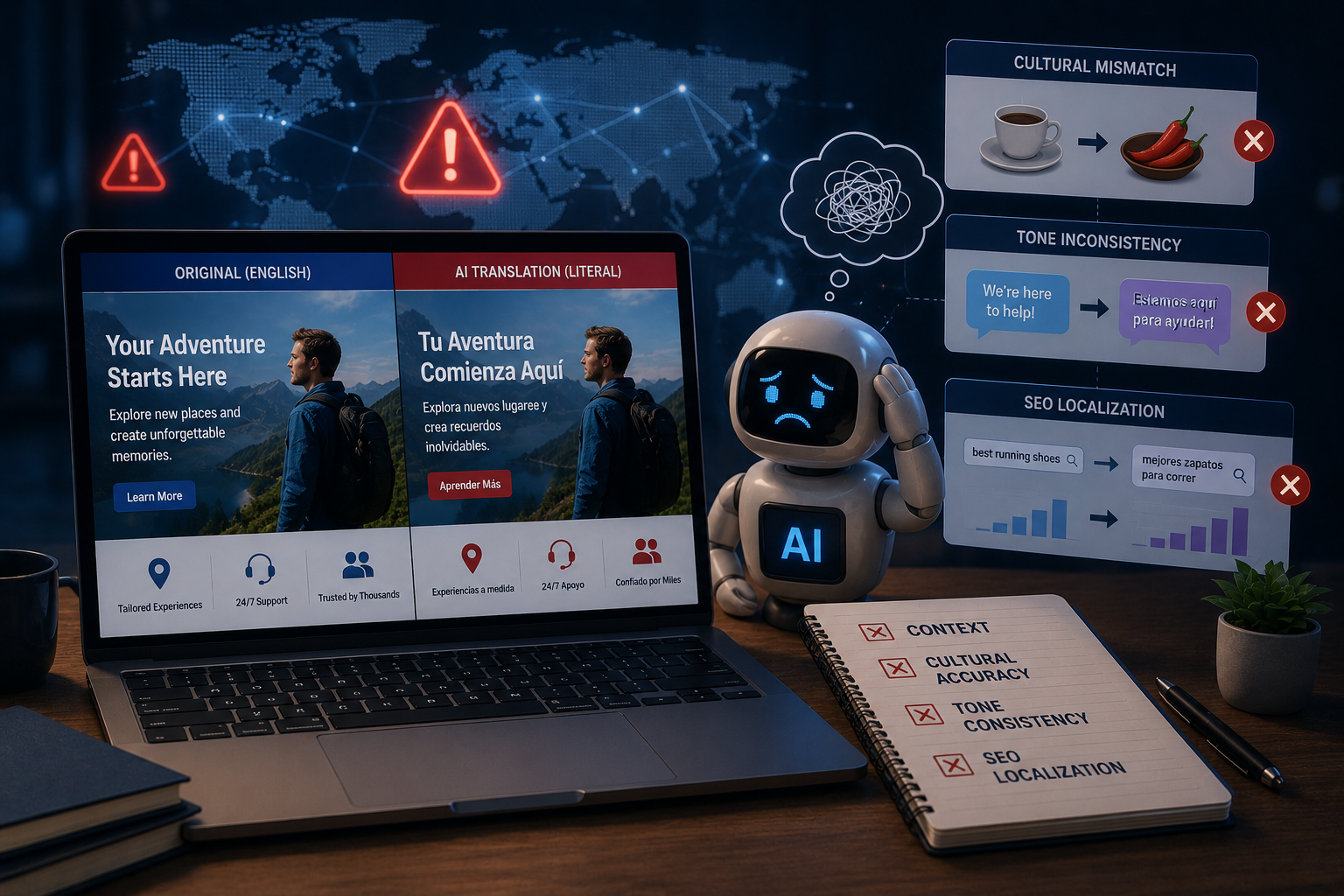
Even though AI has improved significantly, it still struggles with context. Language is not just vocabulary—it includes tone, culture, emotion, and intent. A website translation service that relies only on automation often fails to capture these deeper layers of communication.
One common issue is cultural mismatch. A message that feels persuasive in English may come across as confusing or even inappropriate in another language. AI often translates words correctly but fails to adapt meaning to cultural expectations, which can directly affect how users perceive a brand and influence conversion rates.
Another challenge is tone inconsistency. Websites depend on a unified brand voice to build trust. When AI translates sections separately, the tone can shift unintentionally, making the brand feel inconsistent or unreliable.
There is also the issue of SEO localization. A proper website translation service must adapt not only language but also keywords, metadata, and search intent for each market. AI tools often translate keywords literally, which weakens visibility in local search engines and reduces performance.
These limitations clearly show that AI alone cannot fully support professional global communication.
Real-World Scenario: When AI Translation Hurts Business Growth
Imagine an e-commerce company expanding into Latin America. To save time and reduce costs, it relies entirely on an automated website translation service to localize its platform.
At first, everything seems successful. The website launches quickly in multiple languages, product pages are translated instantly, and the company goes live on schedule.
But within a few weeks, problems start to appear.
A key marketing slogan designed to communicate affordability and quality is mistranslated by AI into a phrase that suggests low-quality products. At the same time, product descriptions lose clarity, and size guides become confusing for customers.
The impact is immediate. Cart abandonment increases, customer support requests rise, and conversion rates drop significantly in the new market. The issue is not speed—it is meaning.
A professional website translation service with human review would have prevented this by ensuring cultural adaptation, tone consistency, and message accuracy before launch.
Companies like The Spanish Group specialize in this type of quality-controlled translation, combining linguistic expertise with industry-specific understanding.
Human Expertise vs AI: Finding the Right Balance
The future of website translation service is not about choosing between AI and humans—it is about combining both.
AI is highly effective for speed, scalability, and handling large volumes of repetitive content. It is useful for first drafts and fast updates. However, it lacks emotional intelligence, cultural awareness, and strategic communication ability.
Human translators provide what AI cannot: interpretation, context, and judgment. They ensure that messaging is not only correct but also meaningful, culturally appropriate, and aligned with brand identity.
When both are combined, AI handles the workload while humans refine and optimize meaning. This hybrid approach allows businesses to scale globally while maintaining quality, trust, and compliance.
Conclusion
AI is transforming the website translation service industry by making global expansion faster, more efficient, and more accessible than ever before. Businesses can now deploy multilingual websites in record time and reach global audiences more easily.
However, speed alone is not enough. Without human oversight, translations can lose meaning, damage brand perception, and reduce customer trust.
The most effective strategy is a hybrid model that combines AI efficiency with human expertise. Providers like The Spanish Group ensure that website translation is not only fast, but also accurate, culturally relevant, and aligned with business goals.
In global communication, success is not about translating words—it is about preserving meaning.
Key Takeaways
- AI improves speed but lacks cultural understanding.
- Human review ensures accuracy and brand consistency.
- SEO localization requires adaptation, not literal translation.
- Hybrid translation delivers the strongest global results.