



























Certified vs Standard Translation: Which One Do You Actually Need?
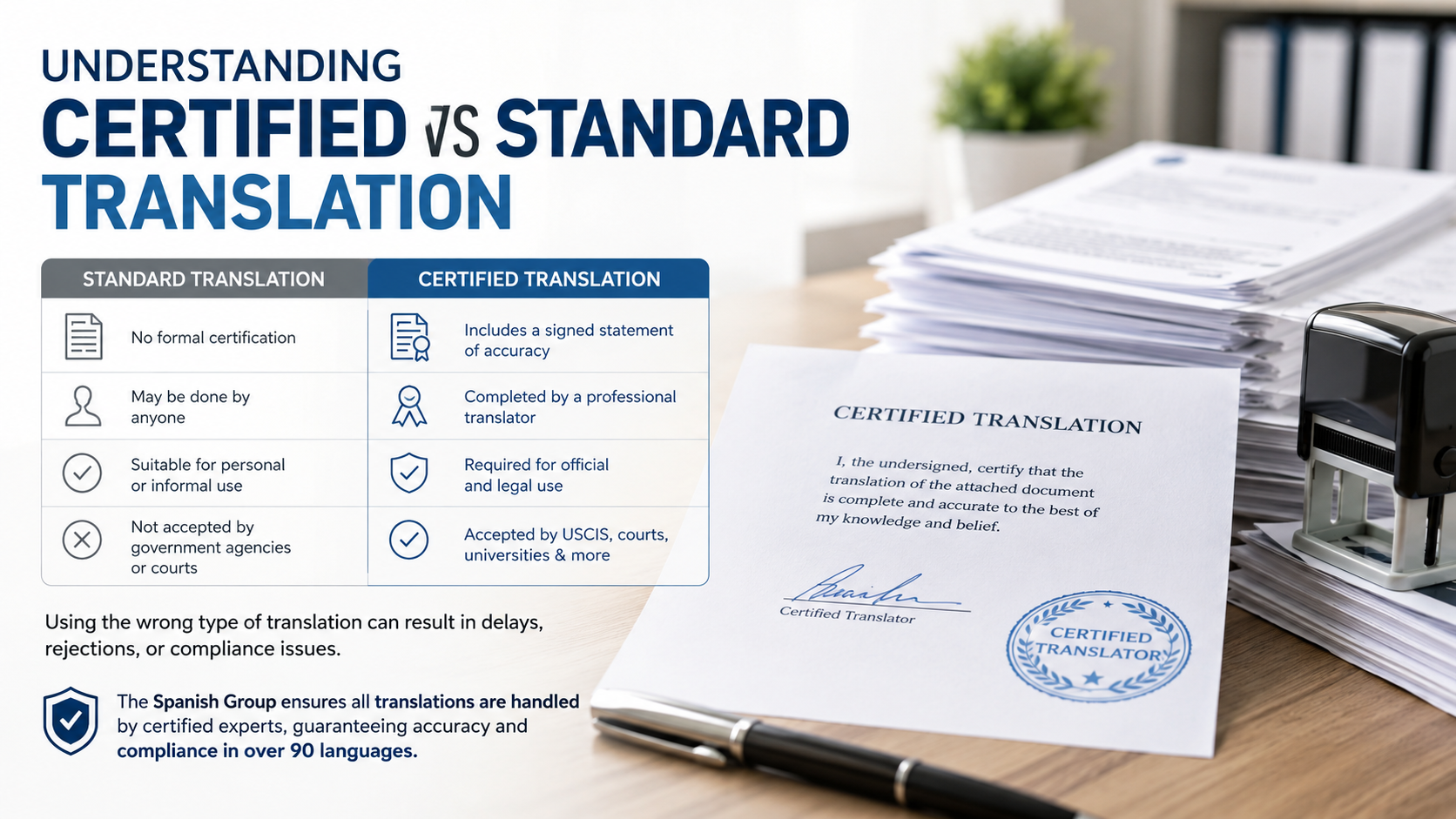
Table of Contents
-
- 1. Summary
- 2. Certified Translation Protects Your Legal Rights
- 3. Understanding Certified vs Standard Translation
- 4. When Certified Translation is Required
- 5. Certified Translations Avoid Costly Mistakes
- 6. Risks of Using Standard Translation in Critical Situations
- 7. How to Choose the Right Translation Service
- 8. Real-World Scenario: The Cost of Incorrect Translation
- 9. Conclusion
- 10. Key Takeaways
Summary
Using a standard translation instead of a certified one can delay—or even cause rejection of—your U.S. immigration application or legal filing. Many people assume all translations are the same, but that’s far from true.
This guide explains when you need certified translation services and why accuracy and formal certification matter to avoid delays, legal issues, or financial consequences.
Certified Translation Protects Your Legal Rights
When dealing with legal, immigration, academic, or financial documents, accuracy is not optional. Government agencies, courts, and educational institutions often require translations that meet specific standards.
Certified translation services provide the assurance that your documents are complete, accurate, and officially recognized. Choosing the correct type of translation can help you avoid delays, rejections, and unnecessary expenses.
Understanding Certified vs Standard Translation
Not all translations are created equal. Standard translations may be sufficient for personal or informal use, but they generally lack formal certification and legal recognition.
Certified translations, on the other hand, include a signed statement from a qualified translator or translation provider confirming that the translation is complete and accurate.
Certified translations are commonly required for:
- Immigration documents and USCIS applications
- Legal contracts and court filings
- Academic diplomas and transcripts
- Financial statements and tax documents
- Birth, marriage, and death certificates
Using the wrong type of translation can lead to compliance issues, document rejection, or processing delays. The Spanish Group provides certified translation services in more than 90 languages, ensuring accuracy and acceptance by official institutions.
When Certified Translation is Required
Certain situations require certified translations without exception. Submitting standard translations in these cases may result in delays or outright rejection.
Common examples include:
- Immigration Applications: USCIS requires certified translations for all supporting documents that are not in English.
- Legal Proceedings: Courts, attorneys, and government agencies often require certified translations for legal validity.
- Education Verification: Universities and credential evaluation agencies require certified translations of transcripts, diplomas, and certificates.
- Professional Licensing: Licensing boards frequently request certified academic and professional documents.
Many individuals search for certified translation services near them to ensure their documents meet official requirements and avoid unnecessary delays.
Certified Translations Avoid Costly Mistakes
Critical documents require a higher level of accuracy and accountability. A translation error may seem minor but can create serious legal, financial, or administrative consequences.
Risks of Using Standard Translation in Critical Situations
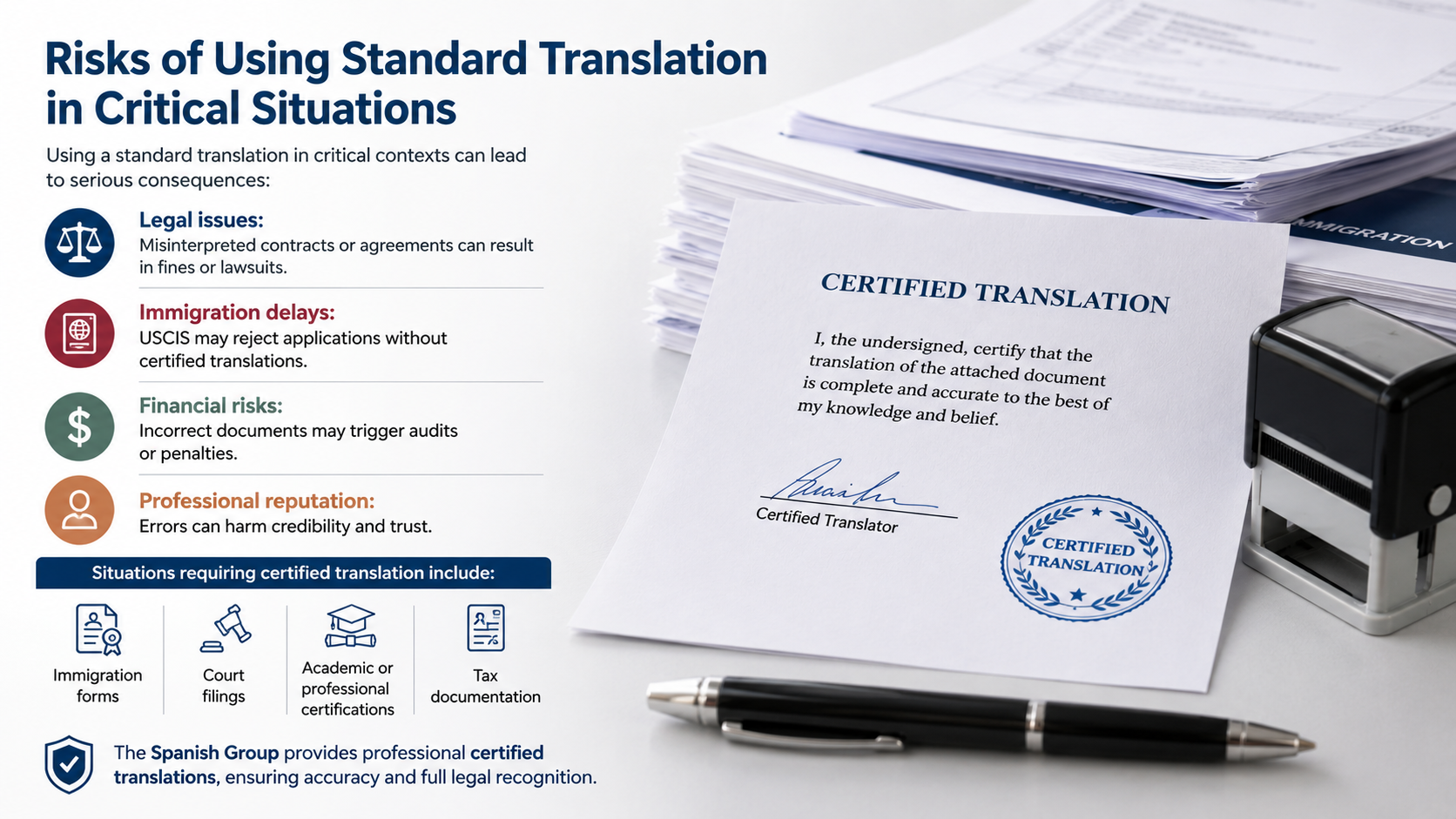
Using a standard translation for important documents can lead to significant complications.
Potential consequences include:
- Legal Issues: Misinterpreted contracts or legal agreements may result in disputes, penalties, or lawsuits.
- Immigration Delays: USCIS may reject applications that do not include certified translations.
- Financial Risks: Inaccurate tax records or financial statements can trigger audits, penalties, or reporting issues.
- Professional Reputation Damage: Errors can undermine credibility with institutions, employers, and government agencies.
Documents that commonly require certified translation include:
- Immigration paperwork
- Court documents
- Academic records
- Professional certifications
- Tax and financial documentation
The Spanish Group provides professionally certified translations that meet official standards and ensure legal recognition.
How to Choose the Right Translation Service
Not every translation provider offers the same level of quality or certification. Selecting a trusted provider can make the difference between smooth approval and costly delays.
Consider the following factors:
- Certification Credentials: Verify that translations include proper certification accepted by relevant authorities.
- Subject-Matter Expertise: Legal, financial, medical, and technical documents require specialized knowledge.
- Quality Assurance: Multi-level review processes help eliminate errors.
- Turnaround Time: Fast delivery is important for urgent applications and filings.
- Customer Reviews: Positive feedback can indicate reliability and service quality.
Pro Tip: Avoid relying solely on AI-generated translations for official documents. Most government agencies, courts, and educational institutions require certified human translations.
Real-World Scenario: The Cost of Incorrect Translation
Maria, an aspiring U.S. resident, submitted her immigration paperwork using a standard translation of her birth certificate. Because the translation lacked proper certification, her application was rejected.
The consequences included:
- Six months of processing delays
- Additional filing fees
- Lost employment opportunities
- Significant stress and uncertainty
What could have prevented the problem?
Had Maria used The Spanish Group's certified translation services, her birth certificate would have met USCIS requirements immediately, allowing her application to proceed without costly delays.
Conclusion
The difference between standard and certified translations goes far beyond a signature. Certified translations provide legal recognition, regulatory compliance, and confidence that your documents will be accepted by government agencies, courts, universities, and other institutions.
While standard translations may be suitable for casual or informational purposes, official documents require certified translation services to avoid rejection, delays, and unnecessary expenses.
The Spanish Group delivers professional certified translations in more than 90 languages, helping individuals and organizations protect their rights, meet official requirements, and achieve peace of mind. Choosing the right translation provider is an investment in accuracy, compliance, and success.
Key Takeaways
- Certified translations are legally recognized; standard translations generally are not.
- Using uncertified translations can result in delays, rejections, and financial penalties.
- Always verify a translator's credentials and subject-matter expertise.
- Professional providers like The Spanish Group ensure accuracy, compliance, and reliability.