



























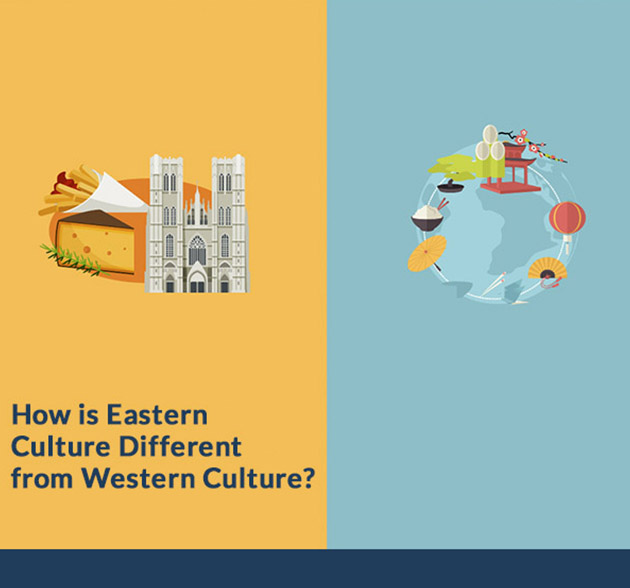
How is Eastern culture different from Western culture?
Table of Contents
- Summary
- 1. Individualism vs. Collectivism
- 2. Social Hierarchy and Respect for Authority
- 3. Communication Styles
- 4. Different Attitudes Toward Time
- 5. Spirituality and Religion
- 6. Family and Social Relationships
- 7. Education and Learning
- 8. Work and Decision-Making
- 9. Food, Hospitality, and Everyday Customs
- 10. Eastern Culture vs Western Culture: Why the Comparison Has Limits
- FAQs
Summary
Ask someone to explain the difference between Eastern and Western culture, and you will probably hear a few familiar answers: individualism versus family, direct communication versus indirect communication, or independence versus community.
Those comparisons are useful, but they only tell part of the story.
The phrase Eastern culture covers a huge part of the world. It can refer to traditions found in China, Japan, India, Korea, Vietnam, Thailand, and many other countries. These places have their own languages, histories, religions, social customs, and ideas about family and work.
Western culture is just as varied. France does not have the same traditions as the United States, and British social customs are not identical to those found in Italy or Canada.
Still, there are some broad patterns worth knowing. In many Eastern societies, family obligations, group harmony, respect for elders, and long-term relationships can have a strong influence on everyday decisions. Western societies are often more comfortable with individual choice, personal independence, direct disagreement, and self-expression.
This is the difference between Western and Eastern culture in its simplest form. The reality, of course, is much less tidy.
Culture influences ordinary things we may not think twice about: how a person speaks to a manager, whether someone says "no" directly, how a family makes decisions, what happens around the dinner table, and even what it means to be "on time."
Understanding those differences can make international travel, business, education, and everyday communication much easier.
What Do We Mean by Eastern and Western Culture?
Western places, especially those shaped by the Enlightenment and the American frontier, usually put a lot of value on personal freedom. People are praised for standing out, for getting a good job, for earning lots of money. Success is measured by what one can do on one’s own. Because of that, relationships are often seen as agreements between individuals. Even when you argue with your family, the idea is that you keep your own opinions.
Eastern culture is a broad label. It may include Confucian traditions in China and Korea, Japanese customs influenced by Shinto and Buddhism, Indian traditions shaped by Hinduism and many other faiths, and the very different cultures found throughout Southeast Asia.
Western culture has just as much variety. European countries have their own languages, cuisines, social habits, histories, and religious traditions. North American culture has also developed through Indigenous histories, European settlement, immigration, and influences from communities around the world.
So why use the terms at all?
They can be helpful when discussing broad cultural patterns. They become a problem when we start treating them as rules.
A Japanese employee and an Indian employee may have very different ideas about hierarchy. A person from Germany may approach time differently from someone in Spain. Likewise, two people from the same country may have completely different attitudes because of their age, profession, family background, or personality.
With that distinction in mind, here are some of the areas where Eastern and Western expectations often differ.
1. Individualism vs. Collectivism
This is probably the first difference people mention when discussing Eastern and Western cultures.
In many Western societies, being independent is considered a positive quality. Children are often encouraged to make their own choices, develop their own opinions, and eventually support themselves.
Choosing a career is a good example.
A young person might decide to study art, start a business, move to another city, or change careers simply because it feels right for them. Parents may offer advice, but the final decision is often expected to belong to the individual.
That does not mean Western families are disconnected. Quite the opposite. Family can be extremely important. The difference is often in the amount of independence expected from an adult.
In many Eastern societies, decisions may be viewed more through the lens of the family or wider group.
A career choice, for instance, might involve questions such as:
- Will this career provide financial security?
- How will it affect the family?
- Will the person be able to support their parents?
- What will the wider family think?
- Does the choice fit the family's long-term plans?
This can sometimes make the decision-making process more complicated, but it can also provide a strong support network.
Put simply, an individualistic approach may ask, "What do I want to do?"
A more collectivist approach may also ask, "How will this affect the people around me?"
Neither question is wrong. They simply put the emphasis in different places.
2. Social Hierarchy and Respect for Authority

The way people interact with someone who has more age, experience, or authority can also reveal cultural differences.
In many Western workplaces, it is not unusual for an employee to call their manager by their first name. A junior employee might interrupt a meeting to challenge an idea or suggest a completely different approach.
That kind of behavior is often interpreted as confidence or initiative.
In some Eastern cultures, the situation can be different. Age and seniority may carry more social weight. A teacher, manager, parent, or older relative may be addressed more formally, and openly disagreeing with them can require more care.
Consider a workplace meeting.
A manager asks, "Does everyone agree?"
A Western employee might respond, "Actually, I think there is a problem with this plan."
Someone from a culture where challenging senior people publicly is discouraged might remain silent or raise the concern privately afterward.
Neither person necessarily has the wrong intention.
The first may believe they are contributing to the discussion. The second may believe they are showing appropriate respect.
This is one reason cultural awareness matters in international workplaces. Silence does not always mean agreement, and informality does not always mean disrespect.
3. Fh2 Styles
The way something is said can matter just as much as what is said.
Western communication, particularly in business settings, is often relatively direct. If a proposal has a problem, someone may simply say so.
For example:
"I don't think this approach will work because the budget is too high."
There may be no hidden meaning. The speaker is simply explaining their position.
In some Eastern communication settings, people may soften disagreement.
Instead of saying:
"This will not work."
Someone might say:
"That could be difficult."
Or:
"Perhaps we should look at another option."
To someone unfamiliar with the communication style, this may sound like a suggestion rather than a rejection.
The reason is often connected to maintaining harmony and avoiding embarrassment.
This is sometimes described as high-context communication. Meaning can depend not only on the actual words but also on tone, relationship, setting, facial expressions, and what remains unsaid.
Of course, people in Eastern countries can be extremely direct, and Westerners can communicate indirectly. Personality matters too.
The useful lesson is not "Eastern people communicate indirectly." It is to remember that directness does not have the same social meaning everywhere.
A comment intended as honest feedback in one culture can sound rude in another.
4. Different Attitudes Toward Time
Time can become surprisingly complicated when people from different cultures work together.
In many Western professional environments, a meeting scheduled for 10:00 is expected to start at 10:00. Deadlines are written into calendars, project plans, contracts, and schedules.
Arriving late without an explanation can sometimes be interpreted as poor planning or a lack of respect.
But there are also situations where relationships take priority over the clock.
Imagine a business meeting that begins with introductions and conversation about family, food, travel, or the local area. Someone who expects a strict agenda may wonder when the "real" meeting will begin.
Another person may see that conversation as an important part of building trust.
There is an interesting catch here: it would be misleading to say that Eastern cultures simply have a relaxed attitude toward time.
Japan, for example, is well known for punctual trains and carefully organized schedules. Other Asian societies can have equally strong expectations about arriving on time.
So the difference between Western and Eastern culture is not simply "one is punctual and the other is not."
It is often more about what people prioritize when a schedule and a relationship pull in different directions.
5. Spirituality and Religion
Religion has influenced both Eastern and Western societies, although the traditions involved are different.
Western history has been deeply shaped by Christianity and Judaism, as well as by later philosophical movements and secular ideas. Christianity, in particular, has influenced European art, politics, architecture, holidays, literature, and social traditions.
At the same time, many Western countries have become increasingly secular and religiously diverse.
Eastern societies have developed alongside traditions such as Buddhism, Hinduism, Taoism, Confucianism, Shinto, Sikhism, Islam, Christianity, and numerous local belief systems.
In some communities, religious or philosophical ideas are closely connected with ordinary activities.
A festival may bring an entire family together. Food may have religious significance. Respect for ancestors may be expressed through family rituals. Meditation or prayer may be incorporated into a person's routine.
There is no single "Eastern approach" to spirituality, though.
An Indian Hindu family and a Japanese Buddhist family do not necessarily have the same beliefs. A person living in China may be religious, nonreligious, or follow traditions for cultural rather than religious reasons.
The same variety exists in Western countries.
That is why religion is best understood as one influence on culture rather than a complete explanation of it.
6. Family and Social Relationships
Family is another area where comparisons between East and West often become noticeable.
In many Eastern societies, extended family relationships can remain important well into adulthood. Grandparents may live with or near their children. Adult children may take responsibility for aging parents. Family gatherings can include relatives across several generations.
Living with parents after finishing university, for example, may not be viewed as unusual or as a failure to become independent.
In many Western societies, moving out of the family home during young adulthood is more common. University, employment, or marriage may lead someone to establish a separate household.
This difference can affect more than living arrangements.
It can influence decisions about marriage, finances, childcare, careers, and where a person chooses to live.
But once again, the lines are not fixed. Rising housing costs have led more young adults in some Western countries to live with parents for longer. At the same time, urbanization and changing lifestyles have encouraged more young adults in parts of Asia to live independently.
Culture changes when people's circumstances change.
7. Education and Learning
Walk into a classroom in different parts of the world and you may notice different expectations about how students should behave.
Some Eastern education systems have traditionally placed considerable emphasis on examinations, academic performance, discipline, and respect for teachers.
Parents may invest significant time and money in tutoring because examination results can influence university admission and future career opportunities.
In many Western educational settings, students are often encouraged to ask questions, debate ideas, make presentations, conduct independent research, and explain their own opinions.
A student saying, "I disagree with your interpretation," may be viewed as evidence of critical thinking rather than disrespect.
But this is changing.
Schools in Asia increasingly use project-based and discussion-based learning, while Western schools still rely heavily on examinations and structured assessment.
The difference is therefore not as clear as it may appear from the outside.
Education is influenced by culture, but it is also shaped by government policy, economics, technology, parents, teachers, and the expectations of particular schools.
8. Work and Decision-Making
Cultural expectations can become particularly visible in an international office.
In some Western companies, employees are expected to take initiative. A manager may say, "If you see a problem, fix it," and expect the employee to make a decision without waiting for approval.
In some Eastern workplaces, employees may be more likely to consult senior colleagues before taking a major step.
Again, this does not necessarily indicate a lack of confidence.
The employee may be considering how the decision affects the wider team or may simply be following the expected chain of responsibility.
Business relationships can also develop differently.
One person may want to get straight to the contract. Another may prefer several meetings before discussing business in detail because trust needs to be established first.
Neither approach is automatically more efficient.
If an international company understands these expectations in advance, it can avoid a lot of unnecessary frustration.
9. Food, Hospitality, and Everyday Customs
Some of the clearest examples of cultural differences appear around food.
In many Asian cultures, meals are designed to be shared. Several dishes may be placed in the center of the table, and everyone takes portions from them.
In many Western settings, each person may order an individual meal.
Neither arrangement tells us everything about a culture, but food often reflects broader ideas about family and social interaction.
Hospitality can also take different forms.
In some Eastern households, repeatedly offering a guest more food or tea may be considered a normal way of showing care. A guest might initially refuse out of politeness before eventually accepting.
In another cultural setting, the same exchange might be interpreted differently.
Even table manners can vary. Whether it is appropriate to begin eating before an elder, how food should be passed, which utensils should be used, or whether leaving food on the plate is acceptable can all depend on the country and occasion.
For travelers, these details are worth learning before visiting another culture.
A little preparation can prevent an awkward moment at the dinner table.
10. Eastern Culture vs Western Culture: Why the Comparison Has Limits
Comparing cultures can teach us a lot, but there is a point where comparisons stop being useful.
Not every person in an Eastern society is collectivist.
Not every Western person wants complete independence.
A young professional in Seoul may have more in common with a young professional in London than with their grandparents. Someone living in Mumbai may have a very different outlook from someone living in a small village elsewhere in India.
Age, education, profession, religion, income, personality, location, family background, and life experience all matter.
Globalization has added another layer.
People now work with colleagues on the other side of the world, watch the same television shows, use the same social platforms, study abroad, move between countries, and build families across cultural boundaries.
As a result, cultural identities are becoming more complicated—not disappearing.
So use eastern culture and Western culture as broad reference points, not as labels for individual people.
How Language Connects Eastern and Western Cultures
There is another piece of the puzzle that is easy to overlook: language.
Words carry more than dictionary definitions. They can contain humor, politeness, history, social status, and cultural assumptions.
A phrase that sounds perfectly normal in English may sound too blunt when translated directly into another language. A joke may depend on a cultural reference that makes no sense to someone from another country.
This is particularly important when communication involves contracts, immigration paperwork, education, business documents, or other material where accuracy matters.
Professional translation can help bridge that gap.
The Spanish Group provides translation services for people and organizations that need to communicate across languages. For international communication, good translation is not simply about replacing one word with another. The intended meaning, tone, and context also need to survive the translation.
That becomes even more important when the people involved already come from different cultural backgrounds.
Final Thoughts
The question of how is Eastern culture different from Western culture does not have a neat five-point answer.
There are broad differences in how some societies approach individualism, family, hierarchy, communication, time, education, religion, and work. But there are also countless exceptions.
That is probably the most important thing to remember when looking at Eastern culture vs Western culture.
A cultural pattern can help explain behavior, but it should never be used to predict what an individual person will think or do.
The better approach is to stay curious.
If a colleague communicates differently, ask yourself whether there may be a cultural reason before assuming they are being difficult. If a business partner takes longer to make a decision, consider whether they are working through a different decision-making process. And if you are visiting another country, learn a few local customs before you arrive.
The world becomes much easier to navigate when we stop expecting everyone to follow the same social rulebook.